Nutrition and digestion
🎯What you need to be able to do
- List the components of a balanced diet and their functions, and explain deficiency diseases.
- Explain how energy needs vary with age, activity and pregnancy.
- Identify the organs of the digestive system and their roles.
- Distinguish mechanical and chemical digestion; name the enzymes, their substrates and products.
- Explain the roles of stomach acid and bile.
- Explain how the small intestine is adapted for absorption.
🥗A balanced diet
| Nutrient | Function | Sources |
|---|---|---|
| carbohydrates | main energy source | rice, bread, cassava, fruit |
| proteins | growth and repair; enzymes, antibodies | fish, eggs, tempeh, tofu, meat, beans |
| lipids | energy store, insulation, cell membranes | oils, butter, nuts, coconut |
| vitamin C | healthy skin and gums (deficiency: scurvy) | citrus fruit, guava, vegetables |
| vitamin D | absorbing calcium for bones (deficiency: rickets) | oily fish, eggs; made in skin in sunlight |
| calcium | bones and teeth; blood clotting | milk, small fish eaten whole, tofu |
| iron | making haemoglobin (deficiency: anaemia) | red meat, liver, spinach, beans |
| fibre | keeps food moving through the gut; prevents constipation | vegetables, whole grains, fruit |
| water | solvent, transport, temperature control | drinks and food |
A balanced diet contains all of these in the right proportions. Energy needs depend on age, sex, body mass and activity: a teenager who is growing and active needs more energy than an office worker; pregnancy and breastfeeding increase needs for energy, protein, iron and calcium. Too much energy intake leads to obesity, which increases the risk of type 2 diabetes and heart disease; too little protein causes kwashiorkor and stunting in children.
🦐The digestive system
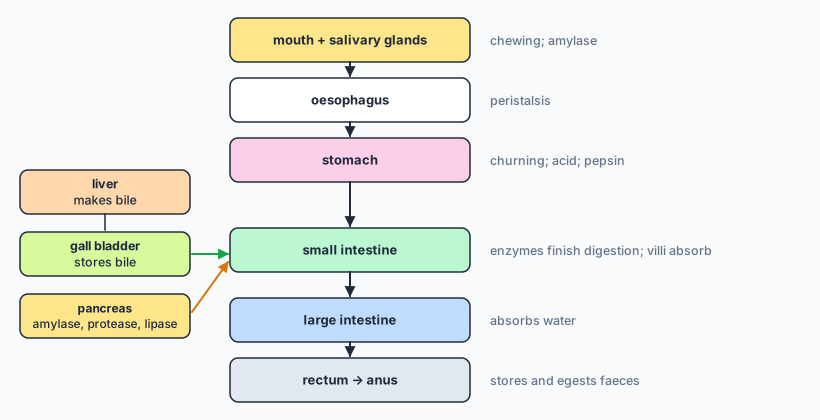
Mechanical digestion breaks food into smaller pieces without changing the molecules: chewing by teeth, and churning by the muscular stomach wall. It increases the surface area for enzymes. Chemical digestion uses enzymes to break large insoluble molecules into small soluble ones. Food is pushed along the gut by waves of muscle contraction called peristalsis.
🧪Digestive enzymes
| Enzyme | Made in | Substrate → products |
|---|---|---|
| amylase | salivary glands, pancreas | starch → maltose (then glucose) |
| protease (e.g. pepsin, trypsin) | stomach, pancreas | proteins → amino acids |
| lipase | pancreas | fats → fatty acids + glycerol |
- Stomach acid (hydrochloric acid) kills most bacteria in food and gives pepsin its optimum pH of about 2.
- Bile, made in the liver and stored in the gall bladder, is alkaline: it neutralizes stomach acid so that the enzymes in the small intestine can work, and it emulsifies fats — breaking them into tiny droplets with a larger surface area for lipase. Bile is not an enzyme.
🛰️Absorption
The products of digestion are absorbed into the blood in the small intestine, which is adapted for it:
- it is very long (about 6 m in adults);
- its lining is folded into millions of finger-like villi, and the cells on the villi have microvilli — a huge surface area;
- villi have walls one cell thick;
- each villus has a dense network of capillaries (for glucose and amino acids) and a lacteal (for fats); the blood flow keeps the concentration gradient steep.
The large intestine absorbs water; what remains (fibre, dead cells, bacteria) is stored in the rectum as faeces and removed through the anus (egestion).
✏️Worked example: following a meal of nasi goreng
Starch (rice): in the mouth, chewing plus salivary amylase begins digestion to maltose; amylase stops working in the acidic stomach; pancreatic amylase continues in the small intestine, and enzymes on the intestine wall produce glucose, which is absorbed into the capillaries of the villi.
Protein (egg): pepsin begins digestion in the stomach at pH 2; trypsin from the pancreas continues in the small intestine; amino acids are absorbed into the blood.
Fat (oil): bile emulsifies it into droplets in the small intestine; lipase breaks it into fatty acids and glycerol, which are absorbed into the lacteals.
🌎Science in context: the double burden of malnutrition
Indonesia faces what nutritionists call a “double burden”: a significant share of young children are stunted by undernutrition, while obesity and type 2 diabetes are rising among adults, often in the same communities. Causes include poverty, sugary drinks, cheap processed food and a lack of nutrition education. Programmes such as free school meals aim to tackle both. Criterion D questions here often ask who should be responsible: families, schools, food companies or the government?
🧠Quick check
1. What is the function of fibre in the diet?
It adds bulk so that muscles can push food through the gut by peristalsis, preventing constipation.
2. Which deficiency causes anaemia, and why?
Iron deficiency: iron is needed to make haemoglobin, so less oxygen can be carried in the blood.
3. What is the difference between mechanical and chemical digestion?
Mechanical digestion breaks food into smaller pieces (teeth, stomach churning); chemical digestion uses enzymes to break large molecules into small soluble ones.
4. Name the products of digesting fats.
Fatty acids and glycerol.
5. Give two functions of bile.
It neutralizes stomach acid, giving a suitable pH for enzymes in the small intestine, and it emulsifies fats, increasing the surface area for lipase.
6. How do villi increase the rate of absorption?
They give a very large surface area, have walls one cell thick, and have a rich blood supply that maintains a steep concentration gradient.
📝Worksheet
Test yourself on the whole topic with a printable worksheet: questions for all four criteria, from recall to a design task, a data-analysis question and a short reflection, with a full mark scheme.
Worksheets are for members — sign in or join. The topic 1 worksheet is a free sample.