Coordination, response and homeostasis
🎯What you need to be able to do
- Describe the pathway stimulus → receptor → coordinator → effector → response.
- Describe the nervous system, neurones and synapses, and explain a reflex arc.
- Describe hormones and compare nervous and hormonal control.
- Explain homeostasis and negative feedback, with blood glucose and body temperature as examples.
- Describe type 1 and type 2 diabetes.
- Describe phototropism and gravitropism and the role of auxin.
🧠The nervous system
A stimulus is a change in the environment. Receptors in sense organs (eyes, ears, skin, tongue, nose) detect it and send electrical impulses along sensory neurones to the central nervous system (CNS) — the brain and spinal cord — which coordinates a response. Motor neurones carry impulses to effectors: muscles that contract or glands that secrete.
Where two neurones meet there is a tiny gap, a synapse. The impulse causes a chemical (neurotransmitter) to be released; it diffuses across the gap and triggers an impulse in the next neurone. Synapses make sure impulses travel in one direction only. Many drugs, such as caffeine, nicotine and painkillers, work by affecting synapses.
Reflex actions
A reflex is a fast, automatic response that does not involve conscious thought, such as pulling your hand away from a hot pan or blinking. The pathway is a reflex arc:
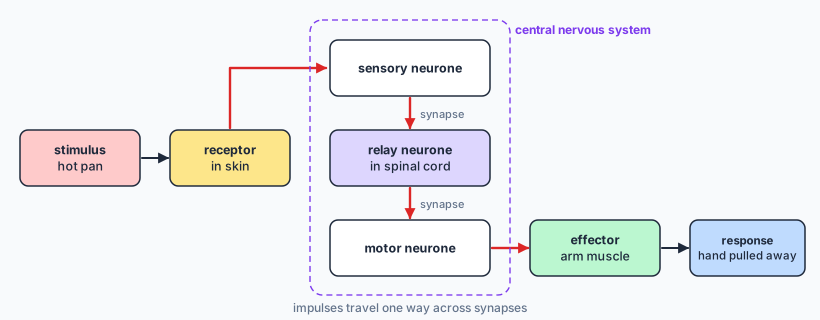
Because the impulse goes through the spinal cord and not to the conscious parts of the brain first, the response is very fast, protecting the body from damage.
🧪Hormones
Hormones are chemical messengers made by endocrine glands and carried in the blood to target organs. Examples: insulin and glucagon (pancreas), adrenaline (adrenal glands, prepares the body for “fight or flight”), oestrogen and testosterone (ovaries and testes), ADH (pituitary, controls water balance).
| Nervous system | Hormonal (endocrine) system | |
|---|---|---|
| Signal | electrical impulses along neurones | chemicals in the blood |
| Speed | very fast | slower |
| Duration | short | usually longer lasting |
| Target | a precise place | wider area, any cell with the right receptors |
⚖️Homeostasis and negative feedback
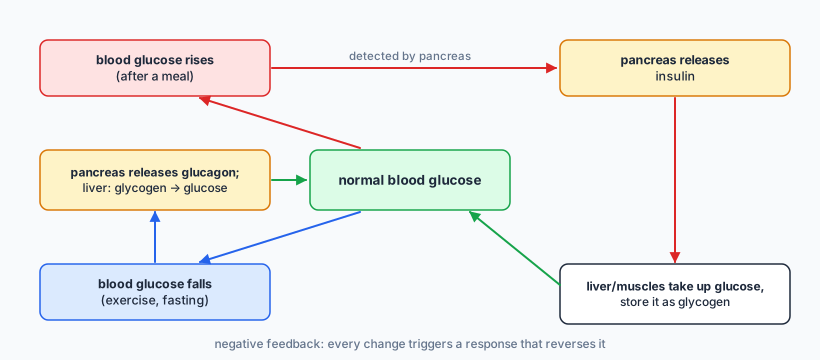
Homeostasis is keeping the internal environment — body temperature, blood glucose, water content — within narrow limits so that cells and enzymes work properly. It works by negative feedback: if a level moves away from the set point, the body makes changes that bring it back.
Diabetes
- Type 1: the pancreas makes little or no insulin (the immune system destroys the insulin-producing cells). It usually starts in childhood and is treated with insulin injections or pumps, and by monitoring blood glucose and diet.
- Type 2: body cells stop responding properly to insulin. It is strongly linked to obesity, poor diet and lack of exercise, and is treated with diet, exercise and medication.
Temperature control
The brain monitors blood temperature (set point about 37 °C). If you are too hot: sweat glands release sweat, which cools the skin as it evaporates, and blood vessels near the skin widen (vasodilation) so more heat is lost. If you are too cold: shivering (muscle contractions release heat from respiration), vessels near the skin narrow (vasoconstriction), and hairs stand up to trap air.
✏️Worked example: interpreting a glucose tolerance test
Person A shows normal control: the rise in glucose triggers insulin release from the pancreas; liver and muscle cells take up glucose and store it as glycogen, so the level returns to normal — negative feedback.
Person B starts higher, rises further and stays high, suggesting diabetes: either little insulin is being made (type 1) or cells are not responding to it (type 2), so glucose is not removed from the blood.
🌱Responses in plants
Plants respond to stimuli by growing in a particular direction: tropisms. Shoots grow towards light (positive phototropism), maximizing photosynthesis; roots grow downwards with gravity (positive gravitropism), anchoring the plant and reaching water. The plant hormone auxin controls this: in a shoot lit from one side, auxin moves to the shaded side and makes those cells elongate more, so the shoot bends towards the light. Auxins are used as weedkillers and rooting powders.
🌎Science in context: diabetes on the rise
Indonesia has one of the largest numbers of adults with diabetes in the world, mostly type 2, and many do not know they have it. Early diagnosis by simple blood tests, affordable insulin and medicines, and lifestyle change all help. A Criterion D task might ask you to evaluate a screening programme or a campaign to reduce sugary drinks, weighing cost, effectiveness and personal freedom.
🧠Quick check
1. What are the two parts of the central nervous system?
The brain and the spinal cord.
2. Why are reflexes fast?
The impulse travels a short pathway through the spinal cord (or lower brain) without going through conscious decision-making, and there are few synapses.
3. How does a hormone reach its target organ?
It is secreted by an endocrine gland directly into the blood and carried around the body in the plasma.
4. What is negative feedback?
A control mechanism in which a change away from a set point triggers responses that return the level to the set point.
5. What does insulin do?
It lowers blood glucose by causing liver and muscle cells to take up glucose and store it as glycogen.
6. Explain why a shoot bends towards light.
Auxin collects on the shaded side, where it causes cells to elongate more than on the lit side, so the shoot grows towards the light.
📝Worksheet
Test yourself on the whole topic with a printable worksheet: questions for all four criteria, from recall to a design task, a data-analysis question and a short reflection, with a full mark scheme.
Worksheets are for members — sign in or join. The topic 1 worksheet is a free sample.