Magnetic effect of a current and motors
🎯What you need to be able to do
- Describe the field pattern and direction around a straight wire and a solenoid, and an experiment to show it; describe how field strength varies EXTENDED.
- Describe how the magnetic effect of a current is used in relays and loudspeakers.
- Describe an experiment showing the force on a current-carrying conductor, and the effect of reversing the current or the field; use Fleming’s left-hand rule EXTENDED.
- Determine the direction of the force on beams of charged particles in a magnetic field EXTENDED.
- Know what increases the turning effect on a coil; describe the d.c. motor and its split-ring commutator EXTENDED.
📚The physics
Magnetic field of a current
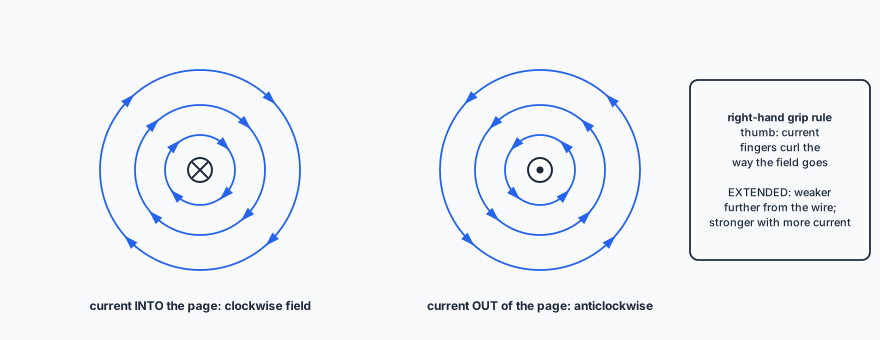
Show the pattern by passing the wire vertically through a horizontal card, sprinkling iron filings and tapping the card; use plotting compasses to find the direction. EXTENDED The field is strongest close to the wire and weakens with distance; a larger current makes it stronger, and reversing the current reverses the field.
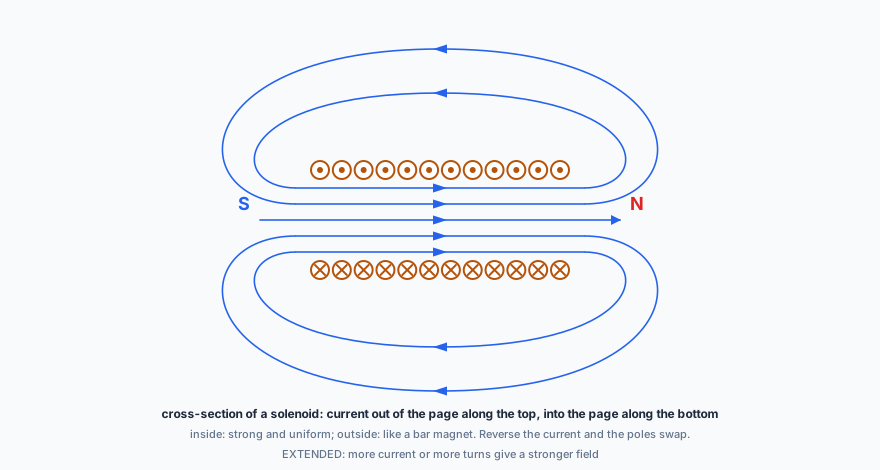
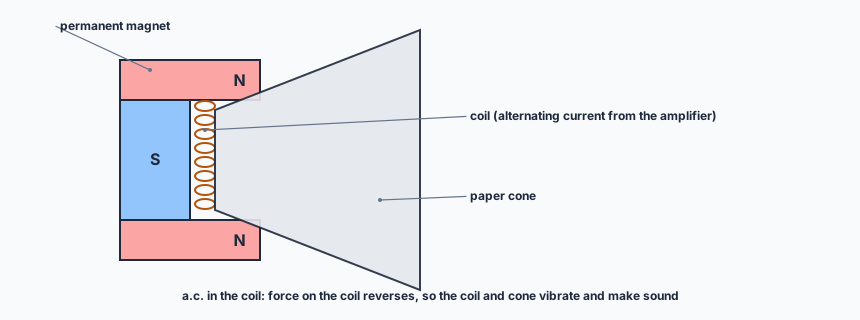
Uses. A relay uses an electromagnet to close a switch in another circuit (topic 4c). A loudspeaker passes an alternating current through a coil in the field of a permanent magnet: the force on the coil keeps reversing, so the coil and the paper cone vibrate and produce sound.
Force on a current-carrying conductor
A wire carrying a current in a magnetic field feels a force (the motor effect). Show it by placing a loose copper rod on two rails between the poles of a magnet and switching on the current: the rod rolls along the rails. Reversing the current or reversing the field reverses the force; reversing both leaves it unchanged.
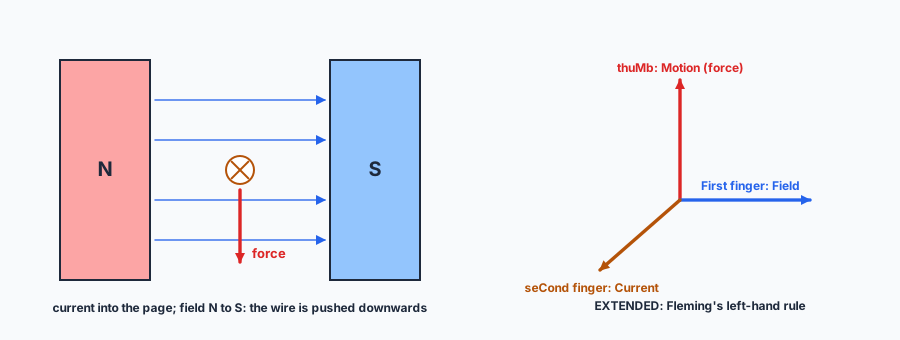
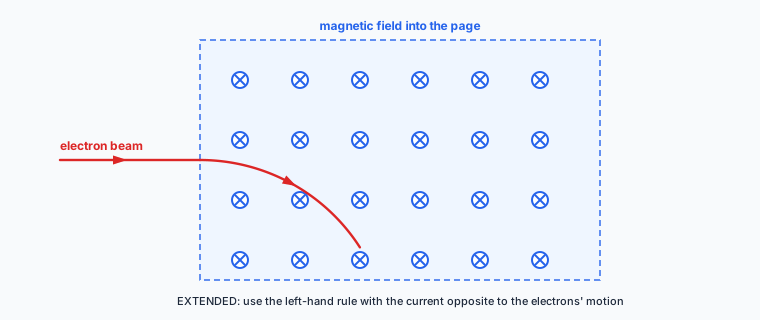
EXTENDED A beam of charged particles is a current too. For electrons, point your second finger opposite to their motion (conventional current flows the other way).
The d.c. motor
A current-carrying coil in a magnetic field experiences a turning effect, which is increased by more turns on the coil, a larger current, or a stronger magnetic field.
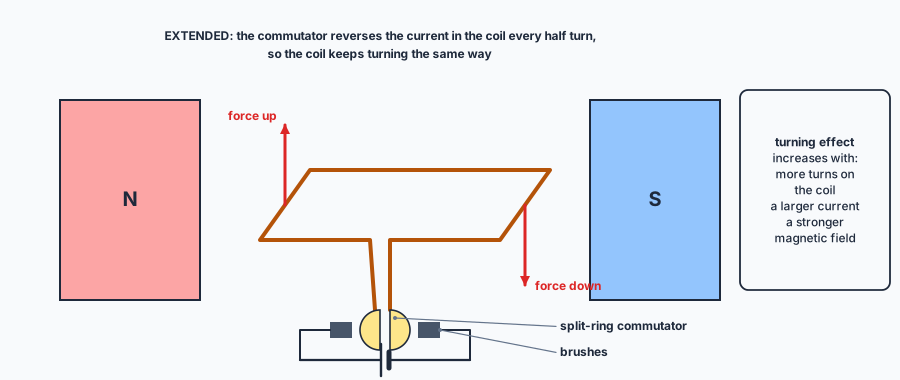
EXTENDED The currents in the two sides of the coil are in opposite directions, so the forces on them are opposite: one side is pushed up, the other down, giving a turning effect. As the coil passes the vertical, the gaps in the split ring swap the connections to the brushes, reversing the current in the coil, so the forces keep turning it the same way.
✏️Worked example
(a) Reverse the current (swap the supply connections); reverse the magnetic field (turn the magnet over).
(b) It still rolls to the right: two reversals cancel.
(c) Any two: increase the current; use a stronger magnet; use more turns on the coil.
(d) It reverses the current in the coil every half turn, so the force on each side always acts to turn the coil in the same direction.
📝Practise
In the style of the multiple-choice and theory papers. EXTENDED marks Supplement content.
1. (Multiple choice.) A long straight wire carries a current out of the page. Which describes the magnetic field around it? A: straight lines towards the wire. B: straight lines away from the wire. C: circles, clockwise. D: circles, anticlockwise.
2. (Theory.) Describe an experiment to show the magnetic field pattern around a straight wire carrying a current. [3]
3. (Multiple choice.) EXTENDED A beam of electrons moves from left to right across the page through a magnetic field directed into the page. In which direction is it deflected? A: up the page. B: down the page. C: into the page. D: out of the page.
4. (Theory.) EXTENDED State how the strength of the magnetic field around a straight wire changes (a) further from the wire, (b) when the current is doubled. [2]
5. (Theory.) Explain why a solenoid with a soft-iron core is used in a relay rather than a permanent magnet. [2]
6. (Theory.) EXTENDED In the d.c. motor diagram above, explain why the two sides of the coil experience forces in opposite directions. [2]
🔗Go deeper — other people’s work
These are external resources, not mine. If one stops working, tell me and everything above it on this page still stands.
- PhET “Magnets and Electromagnets” — solenoid fields
- Walter Fendt — electric motor (d.c.) simulation with commutator