Organic synthesis
🎯What you need to be able to do
- For a molecule with several functional groups, identify them using syllabus reactions and predict its properties and reactions.
- Devise multi-step synthetic routes using every reaction in the syllabus, AS and A Level.
- Analyse a route: the type of reaction and reagents for each step, and possible by-products.
📚The chemistry
The skills are the same as at AS (topic 21, which has the full AS reaction map); the toolkit is bigger. Below are the A Level additions, grouped by what they start from. Use both maps together.
The A Level reaction map
Arenes
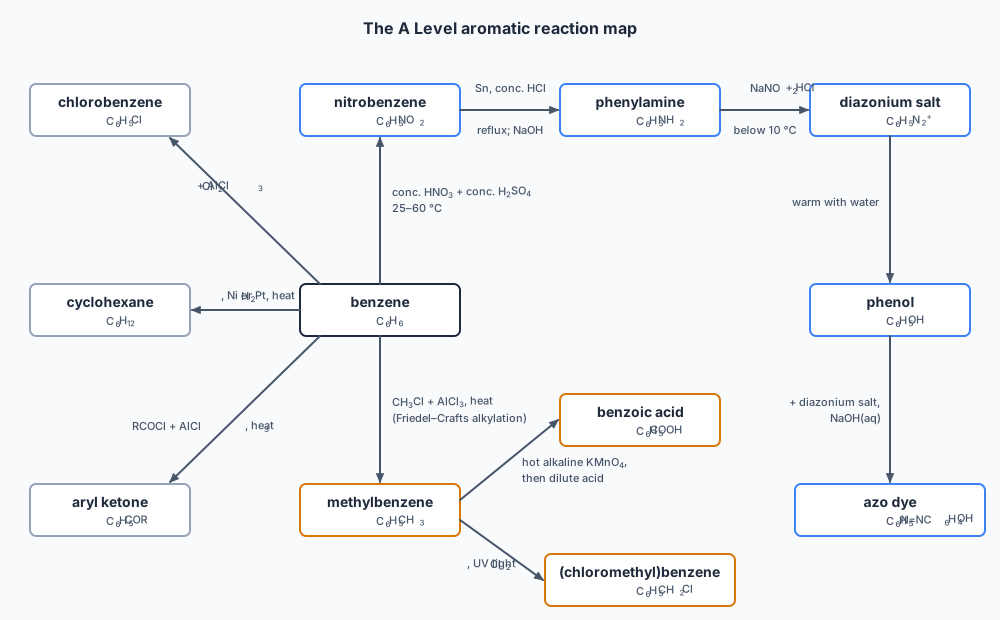
- → halogenoarene: Cl2/Br2 with AlCl3/AlBr3 — electrophilic substitution.
- → nitroarene: conc. HNO3 + conc. H2SO4, 25–60 °C.
- → alkylarene: RCl + AlCl3, heat — Friedel–Crafts alkylation.
- → aryl ketone: RCOCl + AlCl3, heat — Friedel–Crafts acylation.
- alkylarene → benzoic acid: hot alkaline KMnO4, then dilute acid.
- → cyclohexane ring: H2, Pt or Ni, heat.
- methyl side chain → C6H5CH2Cl: Cl2, UV light.
Nitrogen compounds
- nitrobenzene → phenylamine: Sn + conc. HCl, reflux, then NaOH(aq).
- phenylamine → diazonium salt: NaNO2 + dilute HCl, below 10 °C; → phenol on warming; → azo dye with a phenol in NaOH(aq).
- nitrile or amide → amine: LiAlH4 (nitriles also H2/Ni).
- halogenoalkane + primary amine → secondary amine: ethanol, sealed tube.
- amide → acid + NH4+ (aqueous acid, heat) or carboxylate + NH3 (aqueous alkali, heat).
Acids and acyl chlorides
- carboxylic acid → acyl chloride: PCl5, PCl3/heat, or SOCl2.
- acyl chloride + water → acid; + alcohol or phenol → ester; + NH3 → amide; + amine → substituted amide. All at room temperature, releasing HCl.
- methanoic acid → CO2 (mild oxidising agents); ethanedioic acid → CO2 (warm acidified KMnO4).
Phenols
- → phenoxide: NaOH(aq) or Na.
- → 2,4,6-tribromophenol: Br2(aq), room temperature.
- → 2- and 4-nitrophenol: dilute HNO3, room temperature.
- → phenyl ester: acyl chloride.
Strategy
Everything from AS still applies — compare skeletons, compare functional groups, work backwards — with three A Level additions:
- Order matters on a ring. A substituent already present decides where the next one goes. Put a 3-directing group in first if you need a 3-substituted product; a 2,4-directing group for 2- or 4-.
- Protecting and competing groups. A reagent may attack two groups. An acyl chloride reacts with both OH and NH2; NaOH hydrolyses both esters and amides; LiAlH4 reduces acids, esters, amides and carbonyls alike. Check every group in the molecule against every reagent.
- Building nitrogen in. The ring gets its nitrogen by nitration then reduction; a chain gets it from NH3, from a nitrile (reduced) or from an amide (reduced).
✏️Worked example
(a) A phenol (OH on the ring) and a secondary amide (–NHCO–).
(b)(i) The ring is activated by the OH group, so bromine water is decolourised and a substituted product forms. The 4-position is already taken, so bromine substitutes at the two positions next to the OH (which the OH activates), giving a dibromo derivative. (ii) Two groups react with hot NaOH: the amide is hydrolysed, giving the ethanoate ion and 4-aminophenol, and the phenol is deprotonated to the phenoxide. Products: the sodium salt of 4-aminophenol (as phenoxide) and sodium ethanoate.
(c)
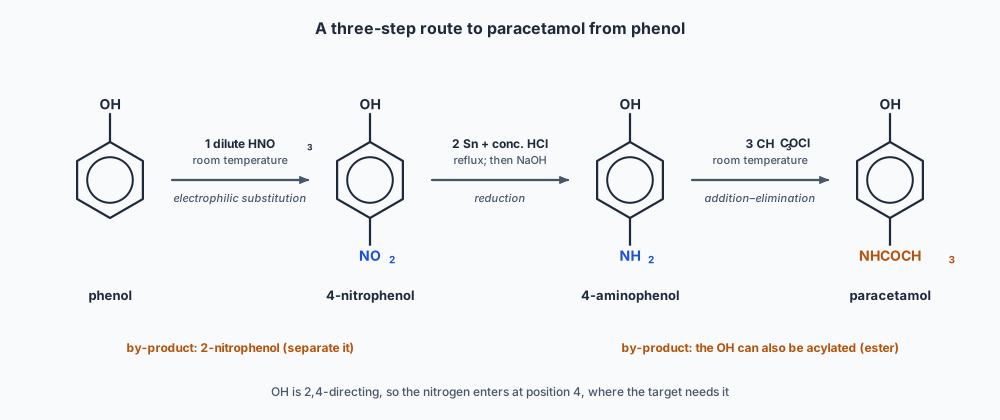
- Step 1: dilute HNO3, room temperature (electrophilic substitution) → 2- and 4-nitrophenol; separate the 4-isomer. The OH is 2,4-directing and activating, which is why mild conditions suffice.
- Step 2: Sn + concentrated HCl, reflux, then neutralise (reduction) → 4-aminophenol.
- Step 3: ethanoyl chloride, room temperature (condensation, addition–elimination) → paracetamol + HCl.
By-products: in step 3, the acyl chloride can also react with the phenol OH, forming an ester (the O-ethanoyl compound), or with both groups. In step 1, 2-nitrophenol is formed alongside the wanted 4-isomer.
📝Practise
Work through these, then reveal the answer. Each question targets a different objective from the list above.
1. Devise a three-step synthesis of phenol from benzene.
2. Suggest a route from propanoic acid to propylamine, CH3CH2CH2NH2, without changing the carbon skeleton.
3. Compound W is H2NC6H4COOH (4-aminobenzoic acid). Predict its reaction with (a) HCl(aq); (b) NaOH(aq); (c) ethanoyl chloride; (d) methanol and conc. H2SO4.
4. A student plans to make 4-nitrobenzoic acid by nitrating benzoic acid. Explain why this fails, and give a better route from methylbenzene.
5. Give the reagents for converting benzene into phenylethanone and then into 1-phenylethanol, naming each reaction type.
6. In the route bromoethane → ethylamine (NH3, ethanol, pressure), name two by-products and suggest how to reduce them.
🔗Go deeper — other people’s work
These are external resources, not mine. If one stops working, tell me and everything above it on this page still stands.
- Chemguide (Jim Clark) — organic reaction summaries by functional group, useful to test yourself against both reaction maps