Diseases and immunity
🎯What you need to be able to do
- Describe a pathogen and a transmissible disease, and how pathogens are transmitted directly and indirectly.
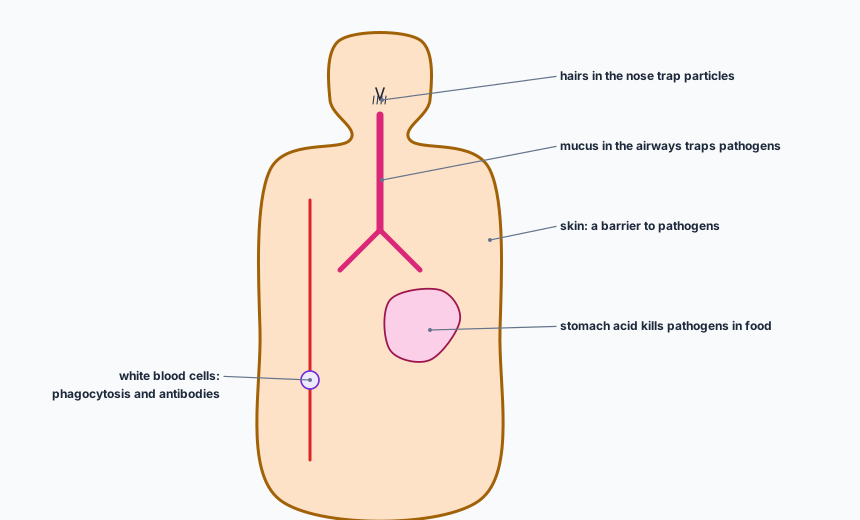
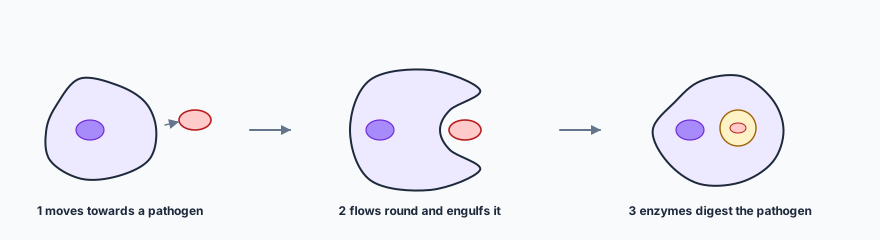
- Describe the body’s defences and explain how hygiene, clean water, waste disposal and sewage treatment control the spread of disease.
- Describe active immunity, antigens and antibodies, and vaccination EXTENDED.
- Explain passive immunity and breast-feeding; describe how cholera causes diarrhoea EXTENDED.
📚The biology
Pathogens and how they spread
A pathogen is a disease-causing organism (bacteria, viruses, fungi, protoctists). A transmissible disease is one in which the pathogen can be passed from one host to another. Pathogens are transmitted:
- directly: by direct contact, including through blood and other body fluids (e.g. HIV);
- indirectly: from contaminated surfaces, food, animals (such as mosquitoes) and air (droplets from coughs and sneezes).
The body’s defences
Controlling the spread of disease
Antibodies and active immunity EXTENDED
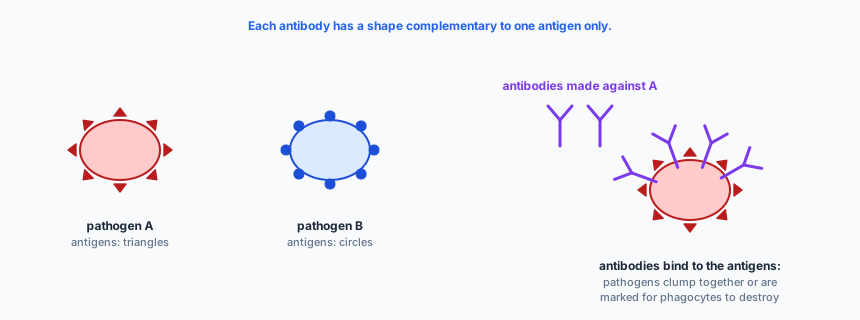
- EXTENDED Each pathogen has its own antigens, molecules with specific shapes on its surface.
- Antibodies are proteins that bind to antigens, leading to direct destruction of pathogens or marking them for destruction by phagocytes. Specific antibodies have complementary shapes that fit specific antigens.
- Active immunity is defence against a pathogen by antibody production in the body. It is gained after an infection or by vaccination.
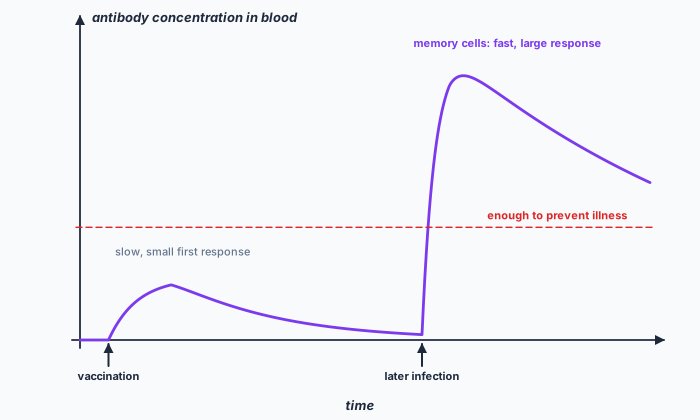
EXTENDED Vaccination: weakened pathogens or their antigens are put into the body; the antigens stimulate an immune response by lymphocytes, which produce antibodies; memory cells are produced that give long-term immunity. If the real pathogen arrives later, memory cells make antibodies so fast that the person does not become ill. When most of a population is vaccinated, the pathogen cannot spread easily, which also protects people who cannot be vaccinated.
EXTENDED Passive immunity is short-term defence by antibodies acquired from another individual: across the placenta before birth, and in breast milk. No memory cells are produced, so it does not last. Breast-feeding is important because a newborn’s immune system is not yet fully developed; antibodies in milk protect it while it builds its own.
Cholera EXTENDED
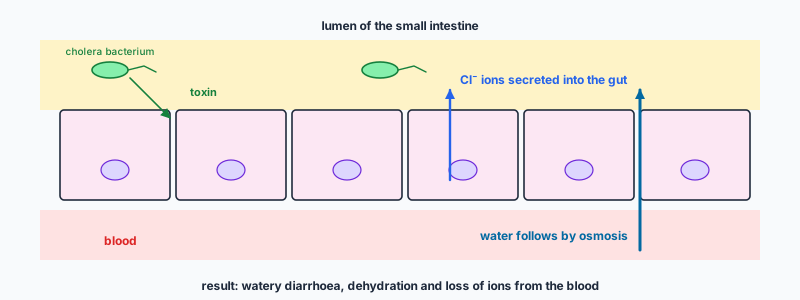
EXTENDED Cholera is caused by a bacterium transmitted in contaminated water. The bacterium produces a toxin that causes secretion of chloride ions into the small intestine, causing osmotic movement of water into the gut, which causes diarrhoea, dehydration and loss of ions from the blood.
✏️Worked example EXTENDED
(a) After infection, antibody concentration rises much faster, and reaches a much higher peak (well above the level that prevents illness).
(b) Vaccination produced memory cells. When the same antigen appears again, memory cells recognise it and lymphocytes produce large amounts of the specific antibody quickly.
(c) This is passive immunity: the antibodies came from the mother and are broken down over time; the baby’s own lymphocytes have not been stimulated, so no memory cells are made.
📝Practise
In the style of the multiple-choice and theory papers. EXTENDED marks Supplement content.
1. (Multiple choice.) What is a transmissible disease? A: any disease caused by poor diet. B: a disease in which the pathogen can be passed from one host to another. C: a disease that is inherited. D: a disease caused by smoking.
2. (Theory.) Give one example each of direct and indirect transmission of a pathogen. [2]
3. (Theory.) Explain how mucus and hairs in the nose help to prevent infection. [2]
4. (Theory.) Explain why treating sewage reduces the spread of disease. [2]
5. (Theory.) EXTENDED Explain why antibodies against one pathogen do not protect against a different pathogen. [2]
6. (Theory.) EXTENDED Outline the process of vaccination. [3]
7. (Theory.) EXTENDED Explain why vaccinating most of a population controls the spread of a disease. [2]
8. (Theory.) EXTENDED Explain why a person with cholera is given a drink containing water and ions. [2]
🔗Go deeper — other people’s work
These are external resources, not mine. If one stops working, tell me and everything above it on this page still stands.
- World Health Organization — fact sheets on cholera and on vaccines
- British Society for Immunology — how vaccines work, with animations