Excretion in humans
🎯What you need to be able to do
- State that carbon dioxide is excreted by the lungs, and urea, excess water and ions by the kidneys.
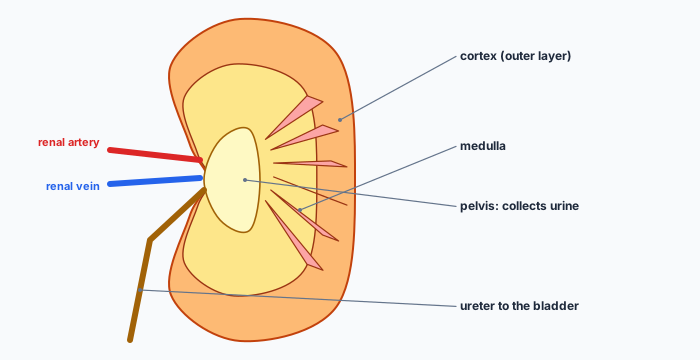
- Identify the kidneys, ureters, bladder and urethra; the cortex and medulla EXTENDED.
- Outline the structure and function of a nephron: filtration, reabsorption and urine formation EXTENDED.
- Describe the liver’s role in assimilating amino acids, deamination and urea formation, and why urea must be excreted EXTENDED.
📚The biology
Excretion is the removal of the waste products of metabolism and substances in excess of requirements (topic 1). Carbon dioxide from respiration is excreted through the lungs. The kidneys excrete urea and excess water and ions, in urine.
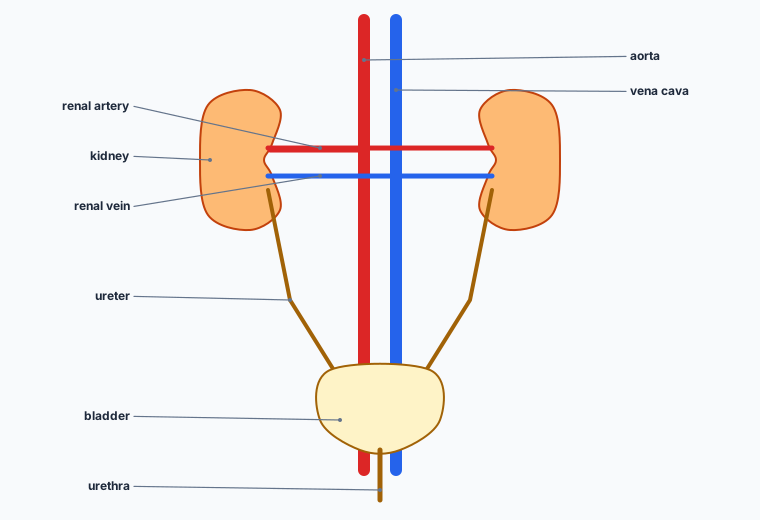
Inside the kidney EXTENDED
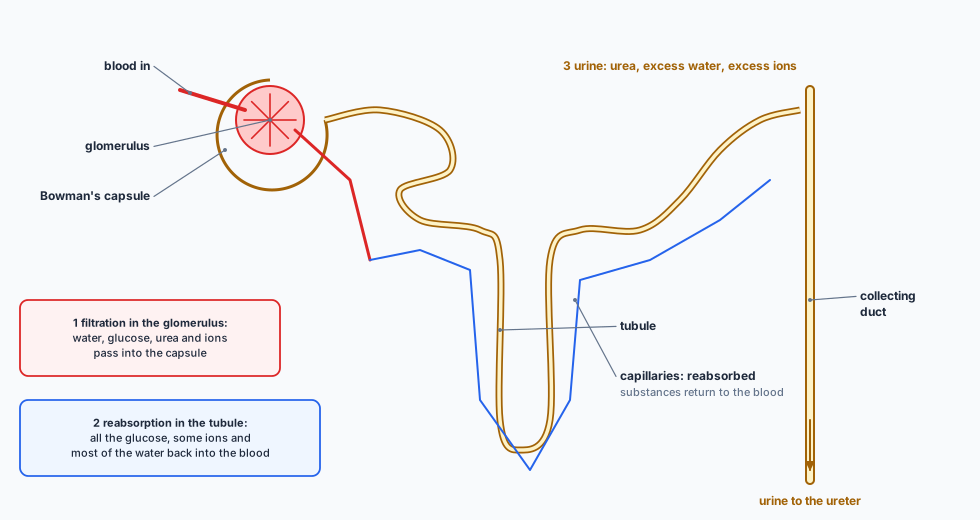
- EXTENDED Filtration: in the glomerulus, water, glucose, urea and ions are filtered from the blood into the nephron.
- Reabsorption: as the filtrate flows along the tubule, all of the glucose, some of the ions and most of the water are reabsorbed back into the blood.
- What remains is urine: urea, excess water and excess ions.
The liver and urea EXTENDED
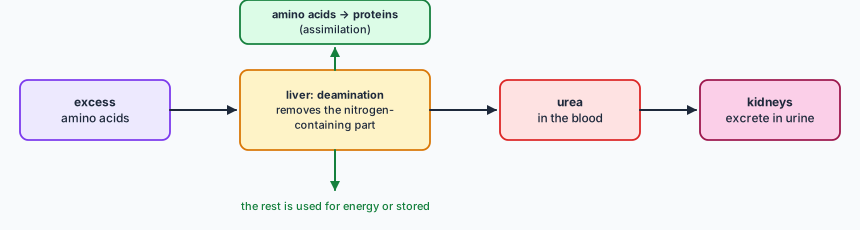
EXTENDED The liver assimilates amino acids by converting them to proteins, such as the proteins in blood plasma. Excess amino acids are deaminated: the nitrogen-containing part is removed and converted to urea. Urea is toxic, so it must be excreted.
✏️Worked example EXTENDED
(a) Protein molecules are too large to be filtered out of the glomerulus, so they stay in the blood.
(b) All of the glucose is reabsorbed into the blood from the tubule, so none is left in the urine.
(c) Most of the water is reabsorbed as the fluid passes along the tubule, but urea is not, so the same urea is dissolved in much less water.
📝Practise
In the style of the multiple-choice and theory papers. EXTENDED marks Supplement content.
1. (Multiple choice.) Which organ excretes carbon dioxide? A: liver. B: kidneys. C: lungs. D: bladder.
2. (Theory.) Name the tube that carries urine (a) from a kidney to the bladder, (b) from the bladder out of the body. [2]
3. (Theory.) State three substances excreted by the kidneys. [3]
4. (Theory.) EXTENDED Name the two regions of a kidney seen in a section, from the outside inwards. [2]
5. (Theory.) EXTENDED Describe what happens to a glucose molecule that is filtered in the glomerulus of a healthy person. [2]
6. (Theory.) EXTENDED Describe deamination and state where it happens. [2]
7. (Theory.) EXTENDED Explain why urea must be excreted. [1]
8. (Theory.) EXTENDED On a hot day a person produces a small volume of dark urine. Suggest why. [2]
🔗Go deeper — other people’s work
These are external resources, not mine. If one stops working, tell me and everything above it on this page still stands.
- Kidney Care UK — how the kidneys work
- BBC Bitesize — the kidney and excretion