The nervous system and the eye
🎯What you need to be able to do
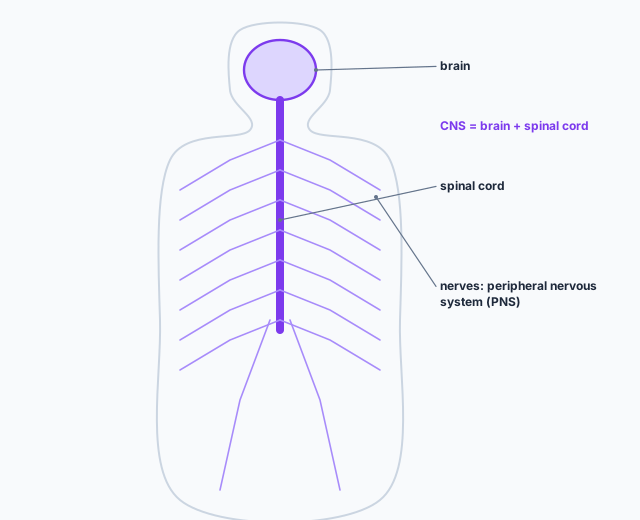
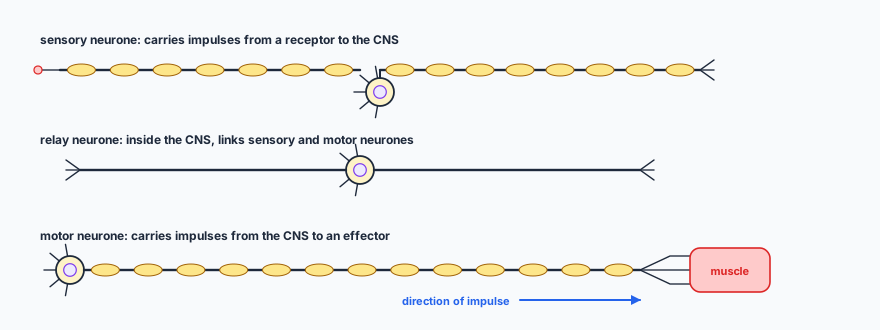
- Describe the CNS and PNS, the role of the nervous system, and identify sensory, relay and motor neurones.
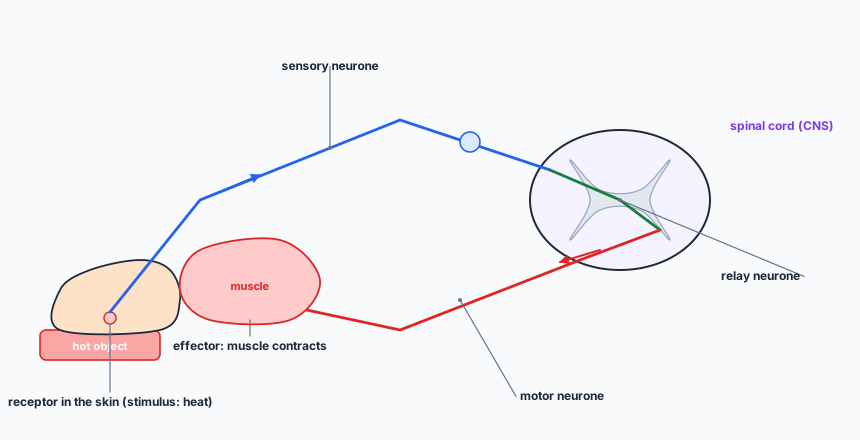
- Describe a reflex arc and a reflex action; describe a synapse and the events at it EXTENDED.
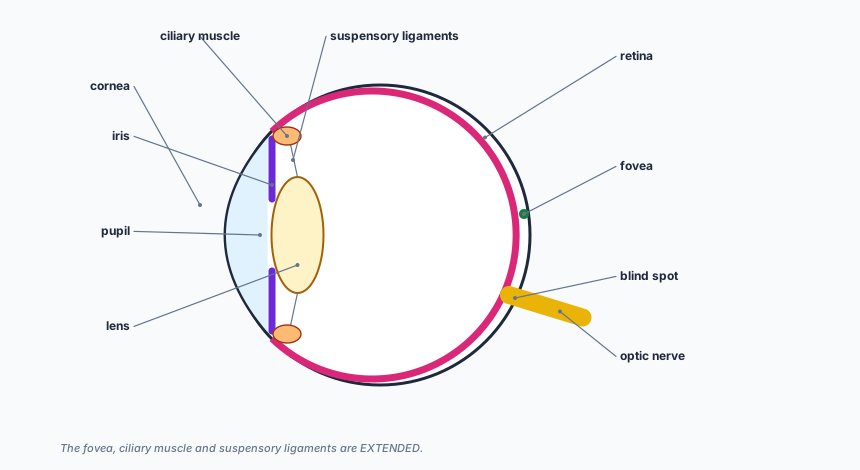
- Describe sense organs; identify the parts of the eye and state their functions; explain the pupil reflex.
- Explain the pupil reflex with antagonistic muscles, accommodation, and the roles of rods, cones and the fovea EXTENDED.
📚The biology
The nervous system
Electrical impulses travel along neurones. The nervous system coordinates and regulates body functions.
Reflexes
A reflex action is a means of automatically and rapidly integrating and coordinating stimuli with the responses of effectors (muscles and glands). It needs no conscious thought, which saves time and protects the body.
A synapse is a junction between two neurones.
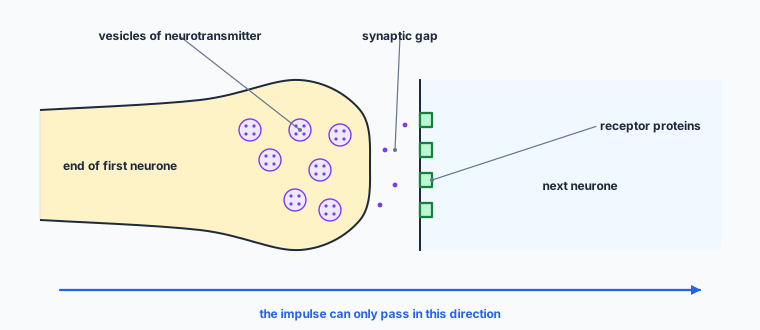
- EXTENDED An impulse stimulates the release of neurotransmitter molecules from vesicles into the synaptic gap.
- The neurotransmitter molecules diffuse across the gap.
- They bind with receptor proteins on the next neurone.
- An impulse is then stimulated in the next neurone.
Sense organs and the eye
Sense organs are groups of receptor cells responding to specific stimuli: light, sound, touch, temperature and chemicals.
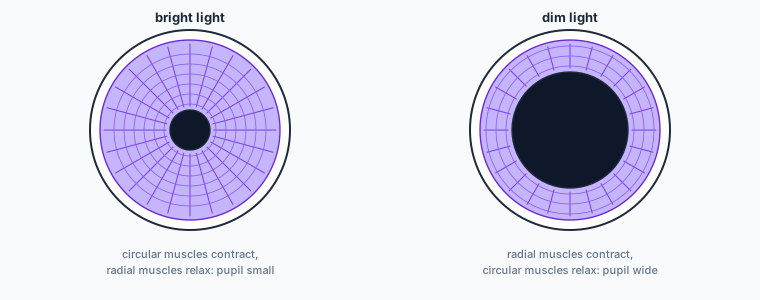
The pupil reflex: in bright light the pupil becomes smaller, letting less light in and protecting the retina; in dim light it widens, letting more light in.
EXTENDED Accommodation changes the shape of the lens to focus light from objects at different distances.
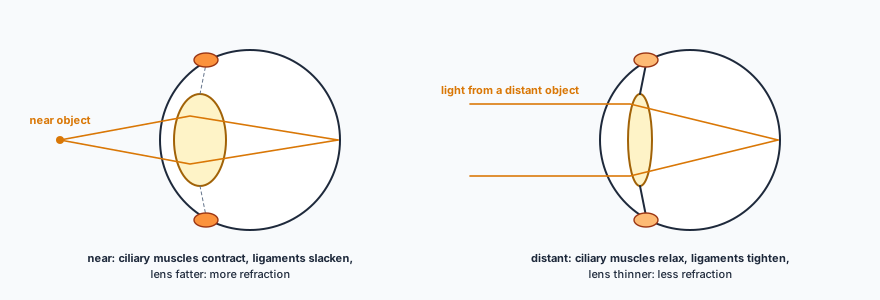
- EXTENDED Near object: the ciliary muscles contract, the suspensory ligaments slacken, the lens becomes fatter and refracts light more.
- Distant object: the ciliary muscles relax, the suspensory ligaments tighten, pulling the lens thinner, so it refracts light less.
- Rods are more sensitive to light, so they give night vision; they are found all over the retina except the fovea. Cones come in three kinds, absorbing different colours of light, for colour vision; they work only in bright light.
- The fovea is the part of the retina where cones are packed most densely (no rods); it gives the sharpest, colour vision.
✏️Worked example
(a) The pupil becomes smaller, letting less light into the eye, which protects the retina from damage by bright light.
(b) A sensory neurone.
(c) The circular muscles contract and the radial muscles relax (they act antagonistically), making the pupil smaller.
(d) The ciliary muscles contract, the suspensory ligaments slacken, and the lens becomes fatter, refracting light more so the near object is focused on the retina.
📝Practise
In the style of the multiple-choice and theory papers. EXTENDED marks Supplement content.
1. (Multiple choice.) What is the function of the optic nerve? A: refracts light. B: controls the size of the pupil. C: carries impulses to the brain. D: detects light.
2. (Theory.) Name the two parts of the central nervous system. [2]
3. (Theory.) A person steps on a sharp pin and lifts their foot before feeling pain. Name the receptor’s location, the effector, and explain why this reflex is useful. [3]
4. (Theory.) Compare the roles of the cornea and the lens. [2]
5. (Theory.) State the function of the iris. [1]
6. (Theory.) EXTENDED Describe the events at a synapse. [4]
7. (Theory.) EXTENDED Explain why impulses can only pass one way across a synapse. [2]
8. (Theory.) EXTENDED Explain why we cannot see colours well at night. [2]
🔗Go deeper — other people’s work
These are external resources, not mine. If one stops working, tell me and everything above it on this page still stands.
- Royal Society of Biology — measuring reaction time with a ruler drop
- BBC Bitesize — the eye and focusing