Diet, the digestive system and teeth
🎯What you need to be able to do
- Describe a balanced diet; state sources and the importance of each nutrient; state the causes of scurvy and rickets.
- Identify the organs of the digestive system and describe their roles in ingestion, digestion, absorption, assimilation and egestion.
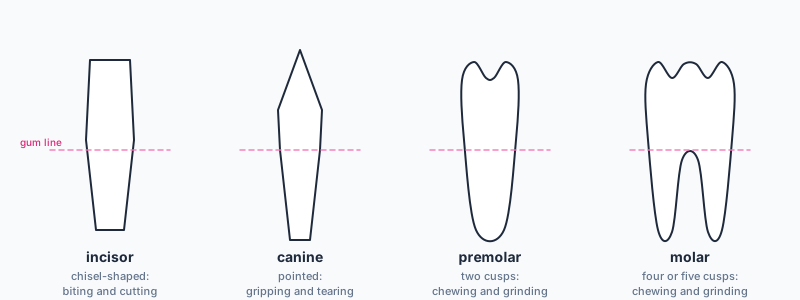
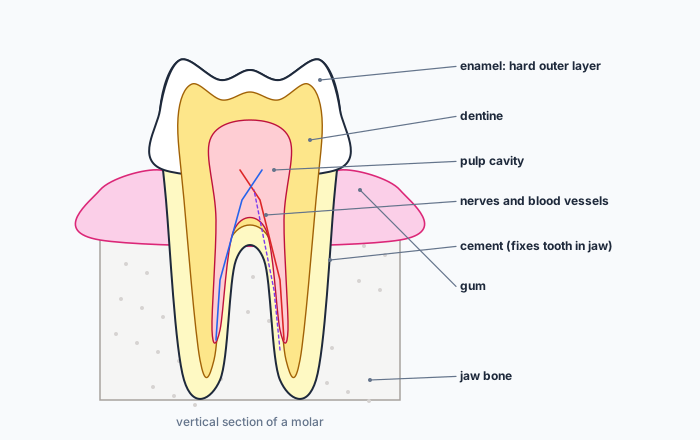
- Describe physical digestion, the types and structure of human teeth, and the role of the stomach.
- Outline the role of bile in emulsifying fats EXTENDED.
📚The biology
A balanced diet
A balanced diet contains all the nutrients in the correct proportions, with enough energy for the person’s age, sex and activity.
The digestive system
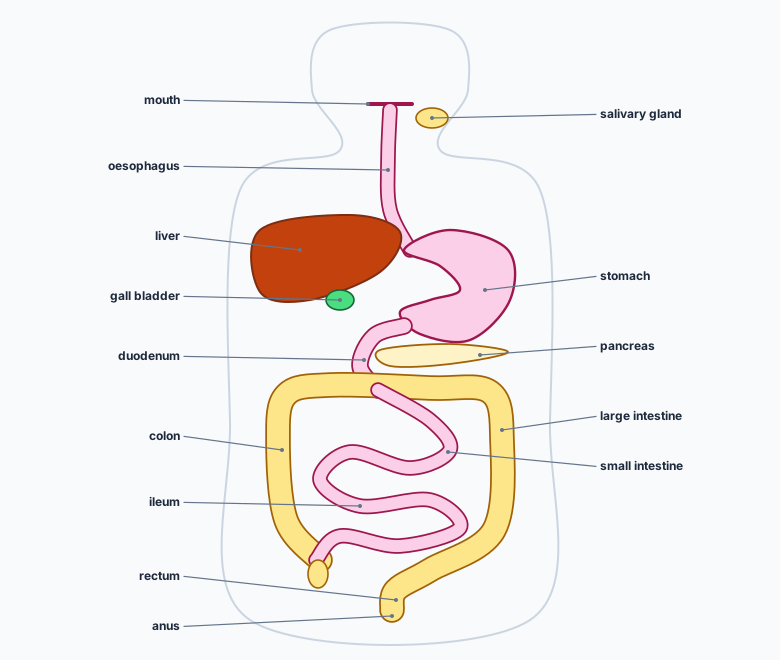
- Salivary glands secrete saliva containing amylase. The oesophagus carries food to the stomach.
- The stomach churns food and secretes gastric juice (protease and hydrochloric acid).
- The pancreas secretes pancreatic juice with amylase, protease and lipase into the duodenum.
- The liver makes bile, which is stored in the gall bladder and released into the duodenum.
- The small intestine (duodenum and ileum) completes digestion and absorbs the products; the colon absorbs some water; the rectum stores faeces until they leave through the anus.
Physical digestion
Physical digestion is the breakdown of food into smaller pieces without chemical change to the food molecules. It increases the surface area of food for enzymes to act on in chemical digestion. Teeth chew food; the muscular wall of the stomach churns it.
Bile EXTENDED
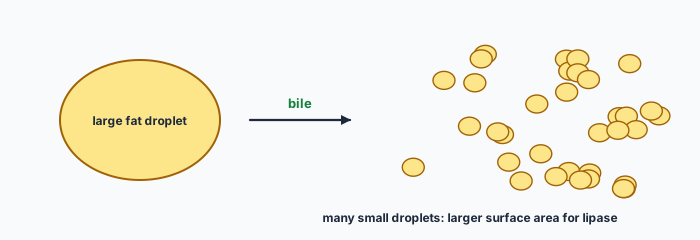
EXTENDED Bile emulsifies fats and oils: it breaks large droplets into many small ones, increasing the surface area for lipase to act on. Bile contains no enzymes. (It also neutralises stomach acid — see 7b.)
✏️Worked example
(a) (i) Ingestion, mouth. (ii) Absorption, small intestine. (iii) Egestion, anus.
(b) Chewing breaks food into smaller pieces, increasing the surface area for enzymes to act on, so chemical digestion is faster.
(c) Bile can no longer be stored and released in large amounts after a meal, so less fat is emulsified; with a smaller surface area, lipase digests fat more slowly and undigested fat may cause discomfort.
📝Practise
In the style of the multiple-choice and theory papers. EXTENDED marks Supplement content.
1. (Multiple choice.) What is absorption? A: taking food into the mouth. B: the breakdown of food. C: movement of nutrients from the intestines into the blood. D: use of nutrients by cells.
2. (Theory.) Explain why a person whose diet lacks iron may feel tired and short of breath. [2]
3. (Theory.) State why fibre is important in the diet, even though it is not digested. [1]
4. (Theory.) Explain why a growing teenager needs plenty of calcium and protein. [2]
5. (Theory.) Name the organ that (a) makes bile, (b) stores bile, (c) secretes lipase into the duodenum. [3]
6. (Theory.) Describe the role of the stomach in physical digestion. [1]
7. (Theory.) Relate the shape of molars to their function. [2]
8. (Theory.) EXTENDED Explain why emulsification increases the rate of fat digestion, even though bile contains no enzymes. [2]
🔗Go deeper — other people’s work
These are external resources, not mine. If one stops working, tell me and everything above it on this page still stands.
- NHS — the Eatwell Guide to a balanced diet
- BBC Bitesize — the digestive system, animated