Biological molecules
🎯What you need to be able to do
- List the chemical elements in carbohydrates, fats and proteins.
- State which small molecules starch, glycogen, cellulose, proteins, fats and oils are made from.
- Describe the iodine, Benedict’s, biuret, ethanol emulsion and DCPIP tests.
- Describe the structure of DNA: double helix, bases, base pairing A–T and C–G EXTENDED.
📚The biology
Elements and building blocks
Large molecules are made by joining many smaller ones:
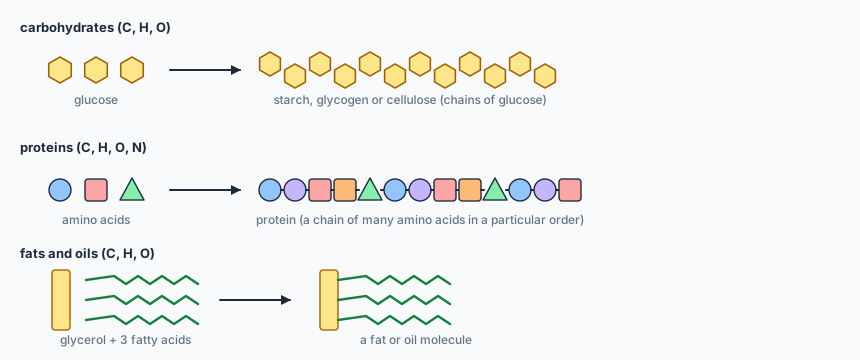
Starch is the energy store in plants, glycogen the energy store in animals and fungi, and cellulose forms plant cell walls. There are about 20 different amino acids; their order makes each protein different.
Food tests
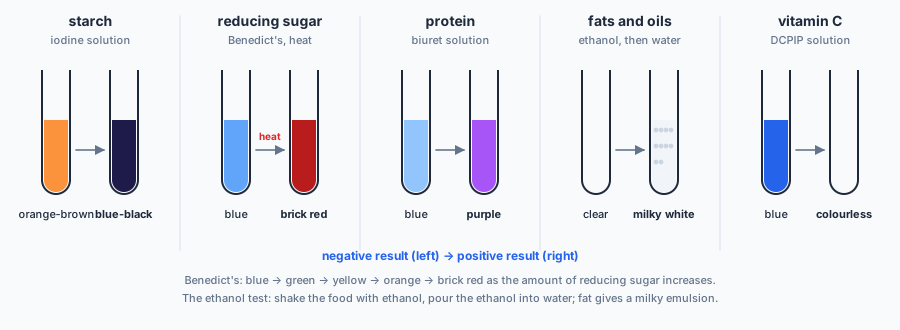
- Starch: add a few drops of iodine solution. Orange-brown stays → no starch; blue-black → starch.
- Reducing sugars (e.g. glucose): add Benedict’s solution and heat in a water bath at about 80 °C for a few minutes. Blue stays → none; green, yellow, orange then brick red as the amount increases.
- Protein: add biuret solution. Blue stays → none; purple (violet) → protein.
- Fats and oils: shake the food with ethanol, then pour the ethanol into water. A milky white emulsion → fat.
- Vitamin C: add the food solution drop by drop to DCPIP. The blue DCPIP turning colourless → vitamin C.
Solid food is first crushed with a little water to make a solution. Safety: wear eye protection, and use a water bath, not a flame, for Benedict’s.
DNA EXTENDED
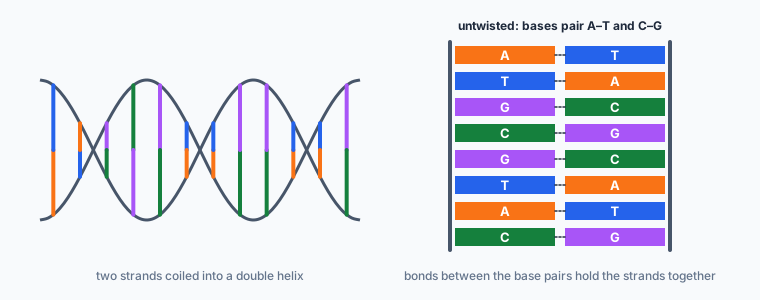
- EXTENDED Two strands are coiled together to form a double helix.
- Each strand contains chemicals called bases (A, T, C and G).
- Bonds between pairs of bases hold the two strands together.
- The bases always pair the same way: A with T, and C with G.
✏️Worked example
(a) X: a reducing sugar (e.g. glucose). Y: starch. Z: protein.
(b) It stays blue — a false negative, because Benedict’s only reacts when heated.
(c) TACGCA (A–T, T–A, G–C, C–G, G–C, T–A).
📝Practise
In the style of the multiple-choice, theory and practical papers. EXTENDED marks Supplement content.
1. (Multiple choice.) Which element is found in proteins but not in carbohydrates? A: carbon. B: hydrogen. C: nitrogen. D: oxygen.
2. (Theory.) Name the smaller molecules that make up (a) glycogen, (b) a fat. [2]
3. (Practical.) Describe how to test a sample of milk for fat, and give the positive result. [3]
4. (Practical.) Four glucose solutions of different concentrations are tested with Benedict’s solution. They turn green, brick red, yellow and orange. Put them in order from lowest to highest concentration. [1]
5. (Practical.) Give one safety precaution for the Benedict’s test and one for the ethanol emulsion test. [2]
6. (Theory.) A student adds lemon juice drop by drop to DCPIP solution. State and explain the colour change. [2]
7. (Theory.) EXTENDED Describe how the two strands of a DNA molecule are held together. [2]
8. (Theory.) EXTENDED In a DNA sample, 30% of the bases are A. Calculate the percentage that are G, and show your reasoning. [2]
🔗Go deeper — other people’s work
These are external resources, not mine. If one stops working, tell me and everything above it on this page still stands.
- Royal Society of Biology — food tests practical, with photographs of the colour changes
- yourgenome — what DNA is and how its structure was discovered