Drugs and antibiotics
🎯What you need to be able to do
- Describe a drug, and the use of antibiotics to treat bacterial infections.
- State that some bacteria are resistant to antibiotics, and that antibiotics kill bacteria but do not affect viruses.
- Explain how using antibiotics only when essential limits the development of resistant bacteria such as MRSA EXTENDED.
📚The biology
A drug is any substance taken into the body that modifies or affects chemical reactions in the body. Medicines, caffeine and alcohol are all drugs.
Antibiotics
Antibiotics are used to treat bacterial infections: they kill bacteria or stop them growing, for example by damaging their cell walls. They do not affect viruses: viruses are not cells and reproduce inside the host’s own cells, so they have none of the structures antibiotics target. Colds and flu, caused by viruses, cannot be cured by antibiotics.
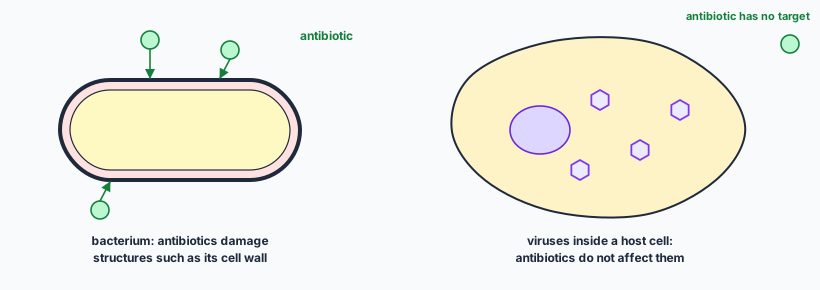
Some bacteria are resistant to antibiotics, which reduces how effective the antibiotics are.
How resistance spreads EXTENDED
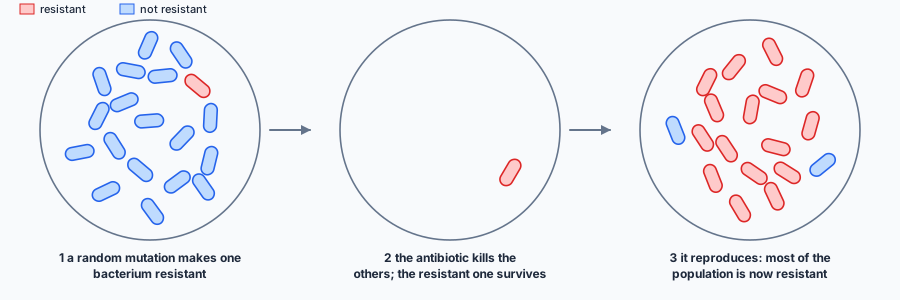
EXTENDED A random mutation may make a bacterium resistant. When an antibiotic is used, the non-resistant bacteria are killed but the resistant ones survive and reproduce, passing on the resistance allele, so a resistant strain such as MRSA develops. Every use of an antibiotic selects for resistance, so using antibiotics only when essential — not for viral infections, and not routinely in farm animals — and always finishing the course reduces the chance of resistant strains developing and spreading.
✏️Worked example
(a) Antibiotics kill bacteria but do not affect viruses, so they would not treat this infection.
(b) Antibiotics kill bacteria that are not resistant; any resistant bacteria survive and reproduce, passing on resistance. The proportion of resistant bacteria increases, so antibiotics fail more often.
📝Practise
In the style of the multiple-choice and theory papers. EXTENDED marks Supplement content.
1. (Multiple choice.) Which describes a drug? A: any substance that causes disease. B: any substance taken into the body that modifies or affects chemical reactions in the body. C: a medicine made by bacteria. D: a substance that kills viruses.
2. (Theory.) State which type of infection antibiotics are used to treat. [1]
3. (Theory.) Explain why antibiotics cannot be used to treat influenza. [2]
4. (Theory.) State what is meant by an antibiotic-resistant bacterium, and one problem it causes. [2]
5. (Theory.) EXTENDED Give two ways of reducing the development of resistant bacteria. [2]
6. (Theory.) EXTENDED Name a strain of bacterium that is resistant to many antibiotics. [1]
🔗Go deeper — other people’s work
These are external resources, not mine. If one stops working, tell me and everything above it on this page still stands.
- World Health Organization — antimicrobial resistance fact sheet
- e-Bug — teaching resources on antibiotics and microbes