Respiration
🎯What you need to be able to do
- State the uses of energy in living organisms, and investigate the effect of temperature on respiration in yeast.
- Describe aerobic respiration and state its word equation; state the balanced equation EXTENDED.
- Describe anaerobic respiration and state the word equations for yeast and muscles; the balanced equation for yeast EXTENDED.
- Describe the oxygen debt and how it is removed EXTENDED.
📚The biology
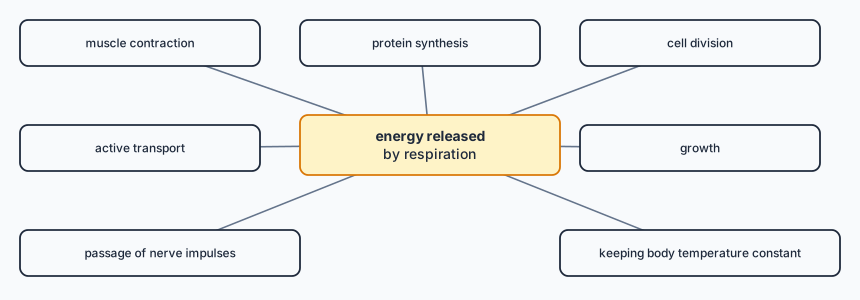
Why organisms respire
Respiration releases energy from nutrient molecules (mainly glucose). It happens in every living cell, all the time. It is not the same as breathing.
Aerobic respiration
Aerobic respiration is the chemical reactions in cells that use oxygen to break down nutrient molecules to release energy. It takes place mainly in the mitochondria.
glucose + oxygen → carbon dioxide + water
EXTENDED The balanced equation is Supplement. It is photosynthesis in reverse, but the two are not the same process run backwards: they use different enzymes in different organelles.
Anaerobic respiration
Anaerobic respiration is the chemical reactions in cells that break down nutrient molecules to release energy without using oxygen. It releases much less energy per glucose molecule than aerobic respiration.
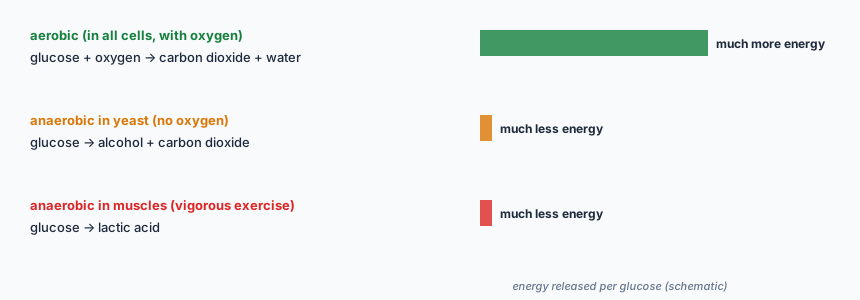
In yeast: glucose → alcohol + carbon dioxide. In muscles during vigorous exercise: glucose → lactic acid.
EXTENDED The balanced equation for yeast is Supplement. Yeast’s anaerobic respiration is used in bread-making and biofuels (topic 21).
The oxygen debt EXTENDED
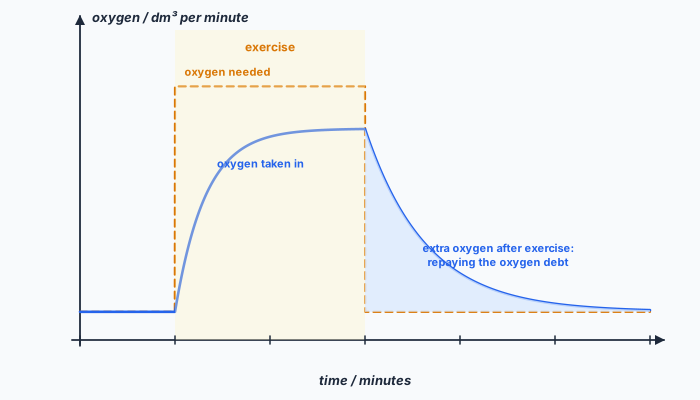
EXTENDED During vigorous exercise, lactic acid builds up in muscles and blood, causing an oxygen debt. After exercise it is removed by:
- EXTENDED a continued fast heart rate, transporting lactic acid in the blood from the muscles to the liver;
- continued deeper and faster breathing, supplying oxygen for aerobic respiration of lactic acid;
- aerobic respiration of lactic acid in the liver.
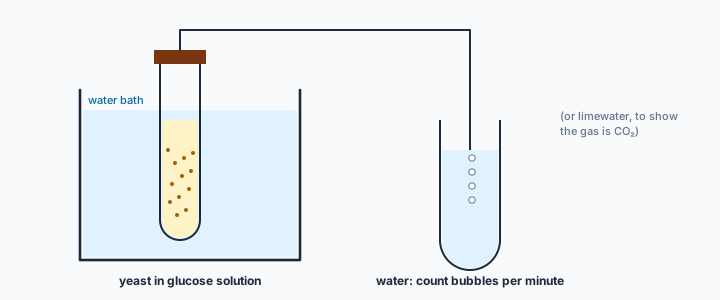
Investigating respiration in yeast
✏️Worked example
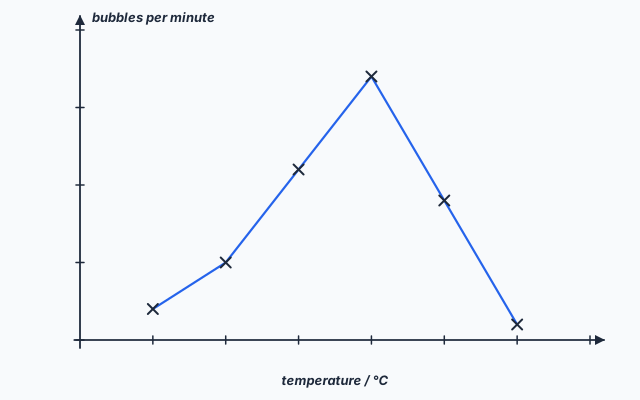
(a) 40 °C (34 bubbles per minute).
(b) Respiration is controlled by enzymes. As temperature rises, molecules have more kinetic energy, so enzyme and substrate collide more often and the reactions of respiration are faster, releasing more carbon dioxide.
(c) The yeast’s enzymes are denatured at high temperature, so respiration almost stops and very little carbon dioxide is produced.
(d) Boiling removes dissolved oxygen, so the yeast respires anaerobically (and kills any other microorganisms).
📝Practise
In the style of the multiple-choice, theory and practical papers. EXTENDED marks Supplement content.
1. (Multiple choice.) What are the products of anaerobic respiration in human muscles? A: carbon dioxide and water. B: alcohol and carbon dioxide. C: lactic acid only. D: lactic acid and carbon dioxide.
2. (Theory.) State three uses of energy from respiration in the human body. [3]
3. (Theory.) State the word equation for aerobic respiration. [2]
4. (Theory.) State one difference between aerobic and anaerobic respiration other than the use of oxygen. [1]
5. (Theory.) Explain why bread dough rises when yeast is added. [2]
6. (Theory.) EXTENDED Write the balanced equation for anaerobic respiration in yeast. [2]
7. (Theory.) EXTENDED After a sprint, an athlete keeps breathing deeply and quickly for several minutes. Explain why. [3]
8. (Practical.) In the yeast experiment, suggest a control and explain its purpose. [2]
🔗Go deeper — other people’s work
These are external resources, not mine. If one stops working, tell me and everything above it on this page still stands.
- Royal Society of Biology — investigating respiration in yeast
- BBC Bitesize — aerobic and anaerobic respiration