Photosynthesis
🎯What you need to be able to do
- Describe photosynthesis, state its word equation and the role of chlorophyll; state the balanced equation EXTENDED.
- Outline how the carbohydrates made are used and stored, and why nitrate and magnesium ions are needed.
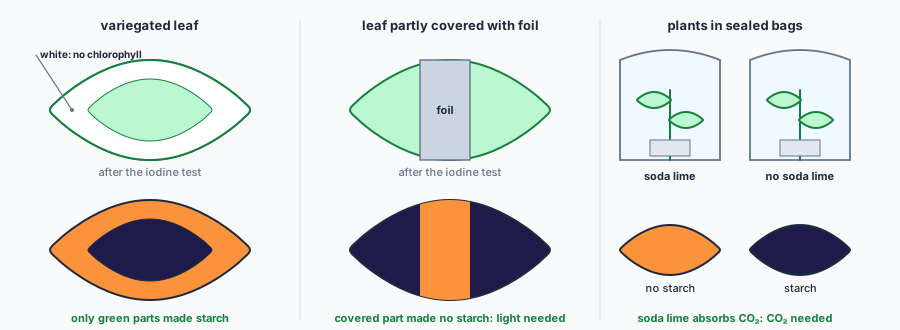
- Investigate the need for chlorophyll, light and carbon dioxide, with controls.
- Investigate the effects of light intensity, carbon dioxide and temperature on the rate, and gas exchange with hydrogencarbonate indicator.
- Identify and explain limiting factors EXTENDED.
📚The biology
What photosynthesis is
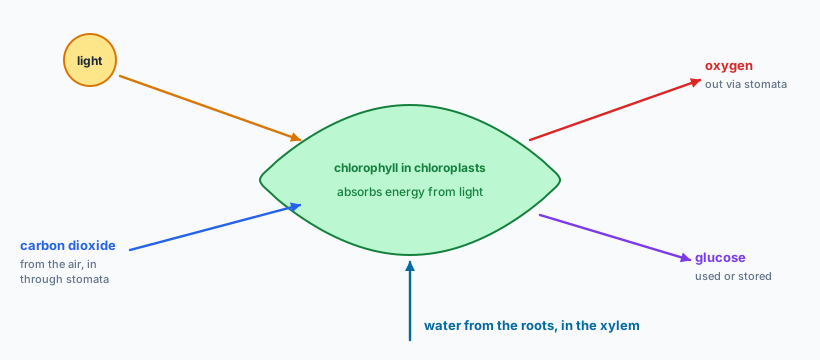
Photosynthesis is the process by which plants synthesise carbohydrates from raw materials using energy from light.
carbon dioxide + water → glucose + oxygen (in the presence of light and chlorophyll)
EXTENDED The balanced equation is Supplement. Chlorophyll is a green pigment found in chloroplasts; it transfers energy from light into energy in chemicals, for the synthesis of carbohydrates.
What happens to the glucose
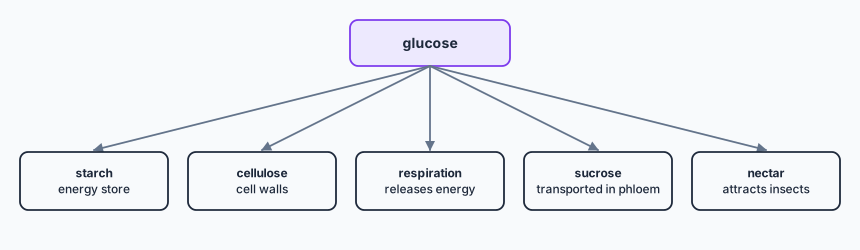
Plants also need mineral ions from the soil: nitrate ions to make amino acids (and so proteins), and magnesium ions to make chlorophyll. A plant short of magnesium has yellow leaves because it cannot make enough chlorophyll.
Showing what photosynthesis needs
Photosynthesis is detected by testing a leaf for starch. First destarch the plant by keeping it in the dark for 48 hours, so any starch found later must have been made during the experiment. To test a leaf: boil it in water (kills the cells, softens the leaf), boil it in ethanol in a water bath — never over a flame — to remove the chlorophyll, rinse it in warm water, spread it on a white tile and add iodine solution.
The rate of photosynthesis
An aquatic plant such as pondweed releases bubbles of oxygen; counting them per minute gives a measure of the rate. Moving the lamp changes the light intensity; sodium hydrogencarbonate in the water supplies carbon dioxide; a water bath changes the temperature.
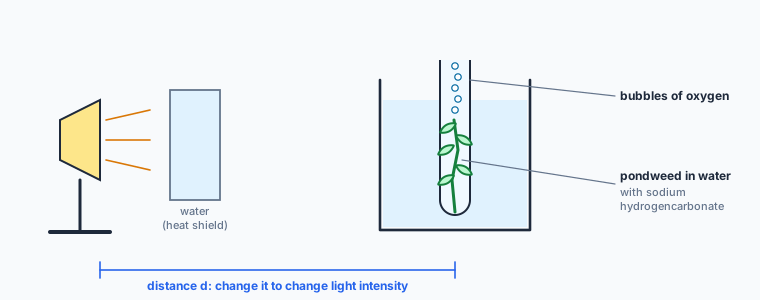
Increasing light intensity, carbon dioxide concentration or temperature (up to the enzymes’ optimum) increases the rate.
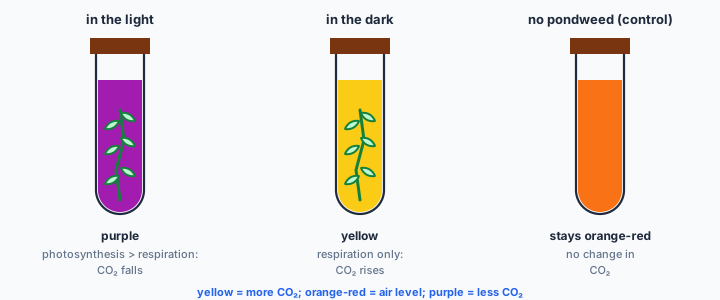
Gas exchange in the light and dark. Hydrogencarbonate indicator changes colour with the carbon dioxide concentration.
Limiting factors EXTENDED
A limiting factor is the factor in shortest supply, which stops the rate increasing further. On a graph, where the rate rises as light intensity rises, light is limiting; where the line levels off, something else (carbon dioxide concentration or temperature) is limiting.
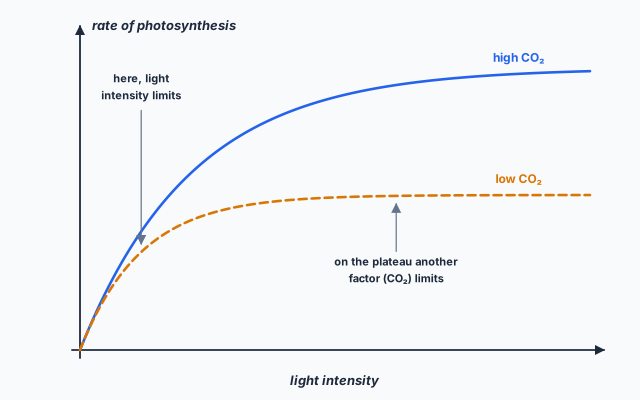
EXTENDED Growers use this in glasshouses: extra lighting on dull days, burning paraffin to add carbon dioxide and warmth — but only up to the point where another factor limits, or the cost exceeds the extra yield.
✏️Worked example
(a) As the distance increases, the rate decreases: moving the lamp further away lowers the light intensity, so less energy is available for photosynthesis.
(b) To let the plant adjust to the new light intensity, so the rate is steady when counted.
(c) Any: bubbles are different sizes; some oxygen dissolves in the water; bubbles may be missed or run together.
(d) Light is no longer the only limiting factor: another factor, such as carbon dioxide concentration or temperature, is limiting the rate.
📝Practise
In the style of the multiple-choice, theory and practical papers. EXTENDED marks Supplement content.
1. (Multiple choice.) Which are the raw materials of photosynthesis? A: glucose and oxygen. B: carbon dioxide and oxygen. C: carbon dioxide and water. D: water and glucose.
2. (Theory.) State the role of chlorophyll in photosynthesis. [1]
3. (Theory.) A plant grown in soil short of nitrate ions is small and weak. Explain why. [2]
4. (Practical.) Explain why a plant is destarched before an experiment on photosynthesis, and describe how. [2]
5. (Practical.) When testing a leaf for starch, why is it boiled in ethanol, and why must a water bath be used? [2]
6. (Practical.) Tubes of hydrogencarbonate indicator are set up with pondweed in bright light, in dim light and in the dark. Predict the final colour of each and explain the dim light result. [4]
7. (Theory.) EXTENDED Write the balanced equation for photosynthesis. [2]
8. (Theory.) EXTENDED On a warm, sunny summer afternoon the rate of photosynthesis in a crop stops increasing as the light gets brighter. Suggest the limiting factor and one way a glasshouse grower could raise the rate. [2]
🔗Go deeper — other people’s work
These are external resources, not mine. If one stops working, tell me and everything above it on this page still stands.
- Science and Plants for Schools (SAPS) — the algal balls and hydrogencarbonate indicator practical
- Royal Society of Biology — investigating the rate of photosynthesis with pondweed