Human reproduction
🎯What you need to be able to do
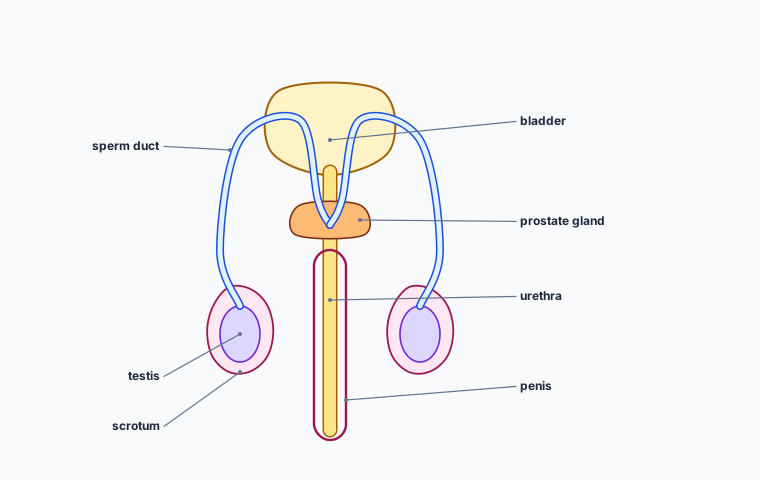
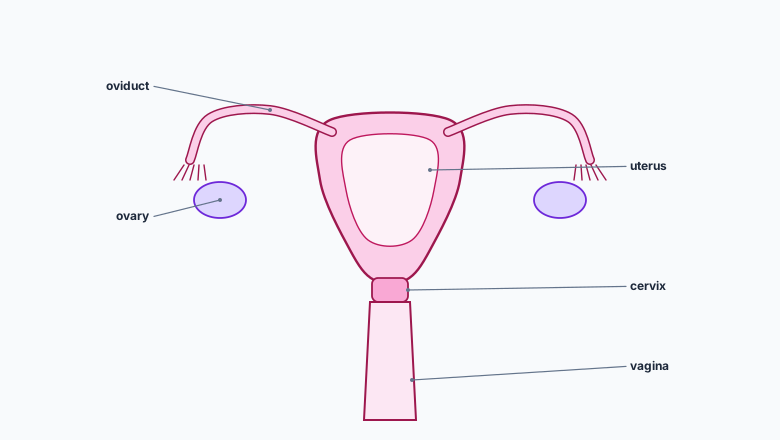
- Identify the parts of the male and female reproductive systems and state their functions.
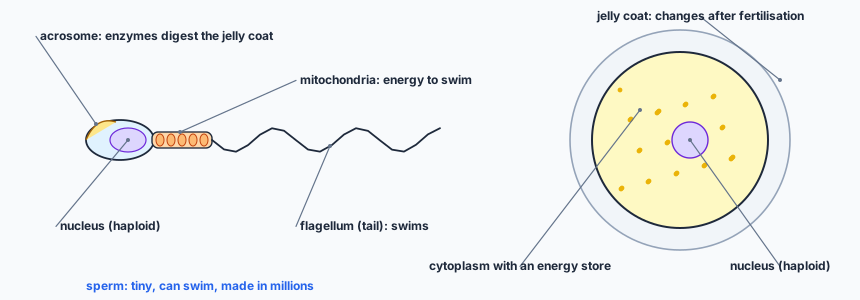
- Explain the adaptive features of sperm and egg cells and compare them; describe fertilisation and early development.
- Identify the umbilical cord, placenta, amniotic sac and fluid; explain the placenta’s role EXTENDED.
- Describe the roles of testosterone and oestrogen, and the menstrual cycle; explain the hormones FSH, LH, oestrogen and progesterone EXTENDED.
- Describe STIs, HIV and AIDS, how HIV is transmitted and how the spread of STIs is controlled.
📚The biology
The reproductive systems
Gametes and fertilisation
Fertilisation is the fusion of the nuclei from a male gamete (sperm) and a female gamete (egg cell).
After fertilisation, the zygote divides to form an embryo, a ball of cells, which implants into the lining of the uterus.
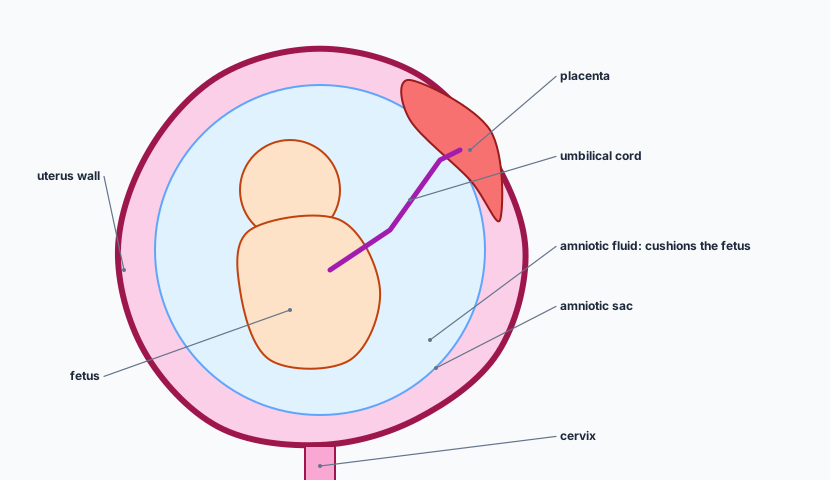
The amniotic sac encloses the amniotic fluid, which cushions and protects the fetus. The umbilical cord joins the fetus to the placenta. EXTENDED In the placenta the blood of the mother and of the fetus come very close but do not mix. Dissolved nutrients (glucose, amino acids) and oxygen diffuse from mother to fetus; carbon dioxide and urea diffuse from fetus to mother. Some pathogens (such as the rubella virus) and toxins (such as nicotine and alcohol) can also cross the placenta and harm the fetus.
Sex hormones and the menstrual cycle
At puberty, testosterone (from the testes) and oestrogen (from the ovaries) cause the secondary sexual characteristics: in boys, growth of facial and body hair, a deeper voice, more muscle; in girls, breast development, wider hips, and the start of the menstrual cycle; in both, pubic hair and a growth spurt.
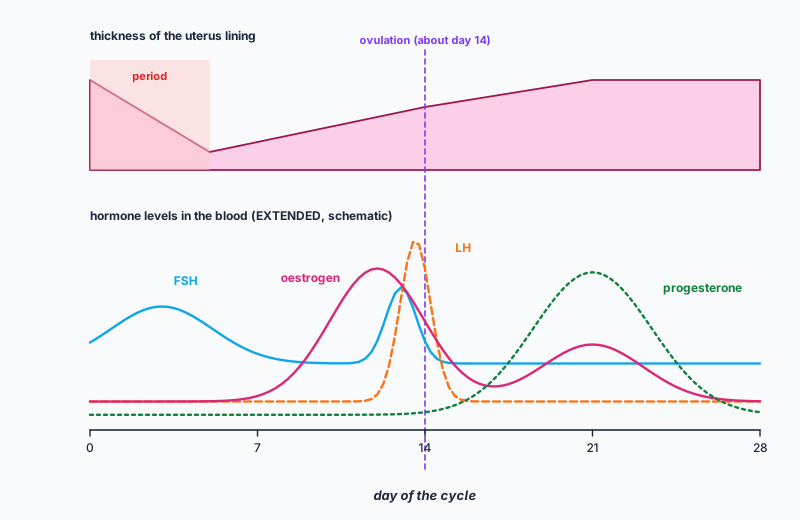
During the menstrual cycle, an egg matures in the ovary and is released at ovulation; the uterus lining thickens ready to receive an embryo. If no embryo implants, the lining breaks down and is lost in the period.
- EXTENDED FSH (from the pituitary gland) stimulates an egg to mature in the ovary and the ovary to make oestrogen.
- Oestrogen (from the ovaries) makes the uterus lining thicken.
- LH (from the pituitary) causes ovulation.
- Progesterone is made in the ovary after ovulation (by the empty follicle, the corpus luteum); it maintains the lining. If no embryo implants, progesterone falls and the lining breaks down.
- In pregnancy, progesterone and oestrogen stay high — made first by the ovary and then by the placenta — so the lining is maintained and no more eggs are released.
Sexually transmitted infections
A sexually transmitted infection (STI) is an infection that is transmitted through sexual contact. HIV (human immunodeficiency virus) is a pathogen that causes an STI; HIV infection may lead to AIDS, as the virus destroys lymphocytes and weakens the immune system. HIV is transmitted in body fluids: unprotected sex, sharing needles, blood transfusions with unscreened blood, and from mother to baby across the placenta, at birth or in breast milk. The spread of STIs is controlled by using condoms, limiting the number of sexual partners, testing and treatment, screening donated blood, and not sharing needles.
✏️Worked example
(a) In the oviduct; in the lining of the uterus.
(b) The flagellum lets it swim; many mitochondria release energy for swimming; enzymes in the acrosome digest the jelly coat so the sperm can reach the egg’s membrane.
(c) Toxins such as nicotine and carbon monoxide can cross the placenta into the fetus’s blood and harm its development.
(d) Without an embryo, progesterone levels fall, and progesterone is needed to maintain the lining, so the lining breaks down.
📝Practise
In the style of the multiple-choice and theory papers. EXTENDED marks Supplement content.
1. (Multiple choice.) Which structure adds fluid to sperm to form semen? A: testis. B: scrotum. C: prostate gland. D: urethra.
2. (Theory.) State the function of (a) the oviduct, (b) the cervix. [2]
3. (Theory.) State the function of the amniotic fluid. [1]
4. (Theory.) Give two secondary sexual characteristics caused by testosterone. [2]
5. (Theory.) Describe two ways HIV is transmitted and two ways its spread is controlled. [4]
6. (Theory.) EXTENDED Name two substances that pass from the mother to the fetus across the placenta, and two that pass the other way. [2]
7. (Theory.) EXTENDED State the hormone that causes ovulation and the gland that secretes it. [2]
8. (Theory.) EXTENDED Explain why a woman does not have periods during pregnancy. [2]
🔗Go deeper — other people’s work
These are external resources, not mine. If one stops working, tell me and everything above it on this page still stands.
- NHS — pregnancy week by week
- World Health Organization — HIV fact sheet