Variation and selection
🎯What you need to be able to do
- Describe variation; distinguish continuous and discontinuous variation and their causes; investigate examples.
- Describe mutation, how new alleles form, and what increases the mutation rate; gene mutation and sources of variation EXTENDED.
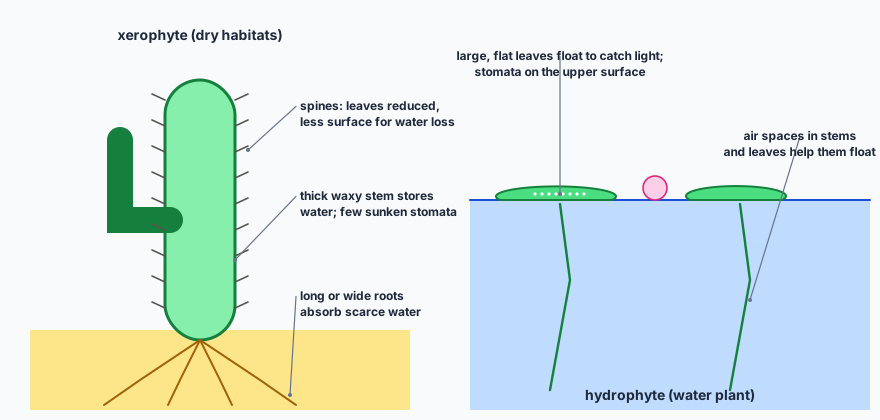
- Describe adaptive features; explain those of hydrophytes and xerophytes EXTENDED.
- Describe natural selection and selective breeding; adaptation, antibiotic resistance and natural versus artificial selection EXTENDED.
📚The biology
Variation
Variation is the differences between individuals of the same species.
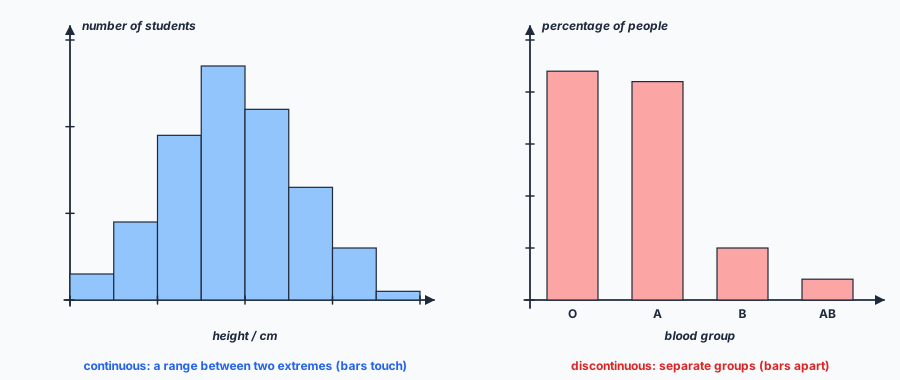
A mutation is a genetic change. Mutation is the way in which new alleles are formed. Ionising radiation (X-rays, gamma rays, UV) and some chemicals (such as those in tobacco smoke) increase the rate of mutation.
EXTENDED A gene mutation is a random change in the base sequence of DNA. Sources of genetic variation in populations: mutation, meiosis, random mating and random fertilisation.
Adaptive features
An adaptive feature is an inherited feature that helps an organism to survive and reproduce in its environment — for example, a camel’s wide feet and fat store, or a polar bear’s thick fur and white colour.
Selection
Natural selection involves:
- genetic variation within populations;
- production of many offspring;
- a struggle for survival, including competition for resources;
- a greater chance of reproduction by individuals that are better adapted to the environment than others;
- these individuals passing on their alleles to the next generation.
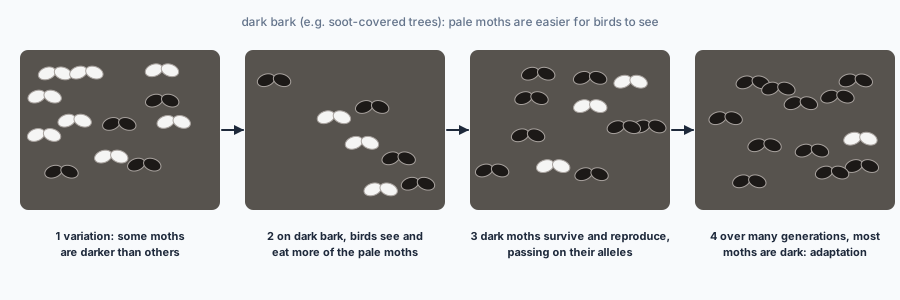
EXTENDED Adaptation is the process, resulting from natural selection, by which populations become more suited to their environment over many generations. The development of antibiotic-resistant bacteria is an example (topic 15).
Selective breeding: humans select individuals with desirable features, cross them to produce the next generation, and select offspring showing the desirable features — repeated over many generations to improve crop plants and domesticated animals.
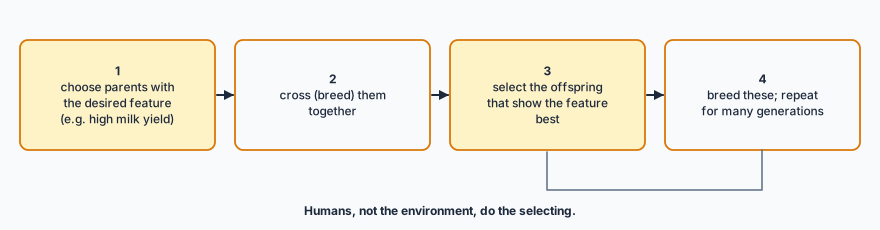
EXTENDED Natural and artificial selection compared: in natural selection the environment selects features that help survival; in artificial selection humans choose features useful to them, which may not help the organism survive in the wild. Artificial selection usually produces change faster.
✏️Worked example
(a) Hand span: continuous. Tongue rolling: discontinuous. Mass of apples: continuous.
(b) They have the same genes, so the difference is due to the environment (e.g. diet), which affects continuous variation such as height.
(c) There was variation in fur colour, caused by mutation. Hares with whiter fur were better camouflaged, so fewer were caught by predators; they survived and reproduced more, passing on the alleles for white fur; over many generations these alleles became more common in the population.
📝Practise
In the style of the multiple-choice, theory and practical papers. EXTENDED marks Supplement content.
1. (Multiple choice.) Which is an example of discontinuous variation? A: height. B: body mass. C: ABO blood group. D: leaf length.
2. (Practical.) Describe how to collect and present data on the variation in hand span in your class. [3]
3. (Theory.) State two factors that increase the rate of mutation. [2]
4. (Theory.) Define an adaptive feature, and give one example from an animal. [2]
5. (Theory.) Describe how a farmer could use selective breeding to produce wheat with a higher yield. [3]
6. (Theory.) EXTENDED Explain two adaptations of a cactus that reduce water loss. [4]
7. (Theory.) EXTENDED Name four sources of genetic variation in a population. [2]
8. (Theory.) EXTENDED Give two differences between natural selection and artificial selection. [2]
🔗Go deeper — other people’s work
These are external resources, not mine. If one stops working, tell me and everything above it on this page still stands.
- PhET “Natural Selection” — simulate bunnies, predators and mutations
- Natural History Museum — the peppered moth story