Home › Learning Hub › IGCSE Biology › 13 Excretion in humans
Topic 13 · 13.1

Excretion in humans

Core and Extended · Papers 1–6

🎯What you need to be able to do

  • State that carbon dioxide is excreted by the lungs, and urea, excess water and ions by the kidneys.
  • Identify the kidneys, ureters, bladder and urethra; the cortex and medulla EXTENDED.
  • Outline the structure and function of a nephron: filtration, reabsorption and urine formation EXTENDED.
  • Describe the liver’s role in assimilating amino acids, deamination and urea formation, and why urea must be excreted EXTENDED.

📚The biology

Excretion is the removal of the waste products of metabolism and substances in excess of requirements (topic 1). Carbon dioxide from respiration is excreted through the lungs. The kidneys excrete urea and excess water and ions, in urine.
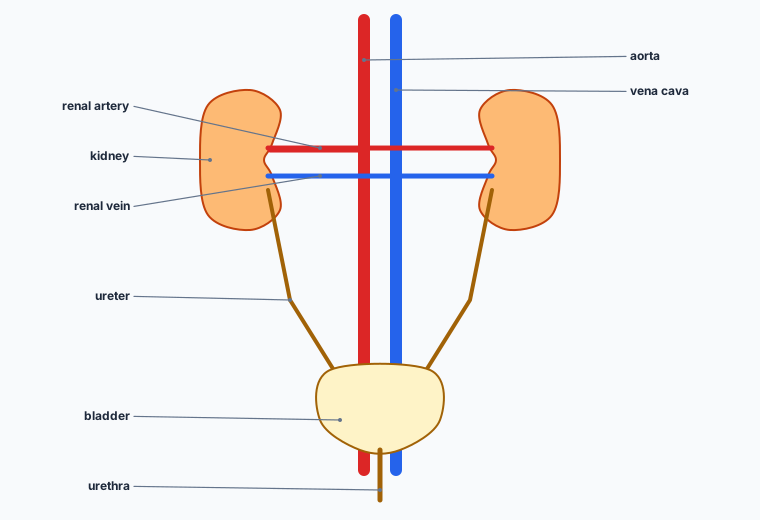
The urinary system. Two kidneys, each supplied by a renal artery from the aorta and drained by a renal vein into the vena cava. A ureter leads from each kidney down to the bladder, and the urethra leads from the bladder to the outside.
Kidneys make urine; ureters carry it to the bladder, which stores it; the urethra carries it out of the body.

Inside the kidney EXTENDED

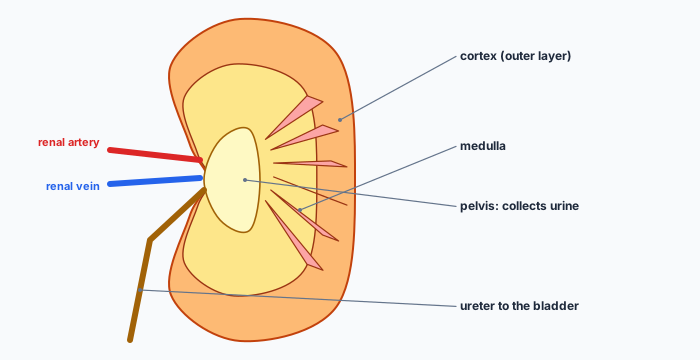
A kidney cut lengthways. The outer region is the cortex; the inner region, with cone-shaped sections, is the medulla; the central space, the pelvis, collects urine and leads into the ureter. The renal artery and renal vein enter at the inner side.
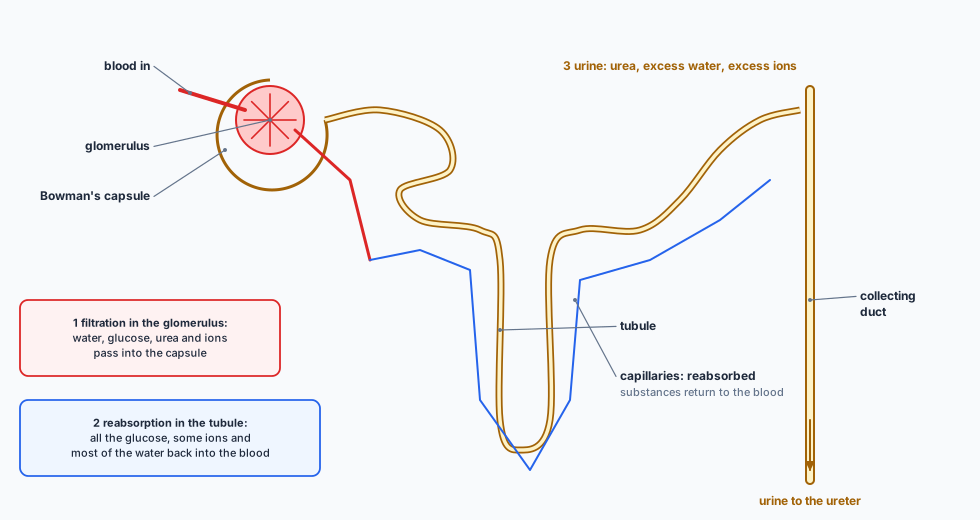
EXTENDED Each kidney contains about a million nephrons running between the cortex and the medulla.
A nephron. Blood enters a knot of capillaries, the glomerulus, inside a cup, Bowman's capsule. The capsule leads into a long, looped tubule surrounded by capillaries, which joins a collecting duct carrying urine to the ureter. Notes: 1, filtration in the glomerulus: water, glucose, urea and ions pass into the capsule. 2, reabsorption in the tubule: all the glucose, some ions and most of the water go back into the blood. 3, urine: urea, excess water and excess ions.
EXTENDED Blood cells and proteins are too large to be filtered, so they stay in the blood.
  • EXTENDED Filtration: in the glomerulus, water, glucose, urea and ions are filtered from the blood into the nephron.
  • Reabsorption: as the filtrate flows along the tubule, all of the glucose, some of the ions and most of the water are reabsorbed back into the blood.
  • What remains is urine: urea, excess water and excess ions.

The liver and urea EXTENDED
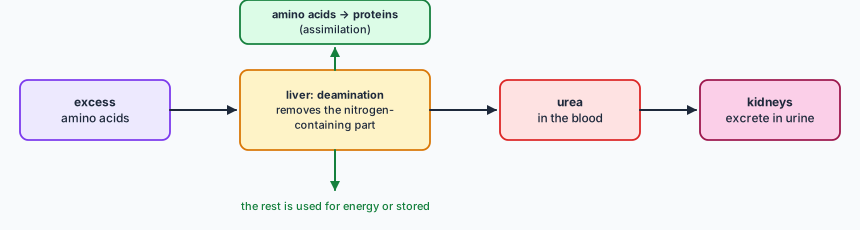
A flow chart. Amino acids are used in the liver to make proteins (assimilation). Excess amino acids go to the liver for deamination, which removes the nitrogen-containing part; that part becomes urea in the blood, which the kidneys excrete in urine. The rest of the amino acid is used for energy or stored.
EXTENDED The body cannot store excess amino acids, so the nitrogen is removed and excreted.

EXTENDED The liver assimilates amino acids by converting them to proteins, such as the proteins in blood plasma. Excess amino acids are deaminated: the nitrogen-containing part is removed and converted to urea. Urea is toxic, so it must be excreted.

✏️Worked example EXTENDED

Samples were taken from three places in a kidney: A, blood entering the glomerulus; B, fluid just inside Bowman’s capsule; C, urine. (a) Protein is present in A but not in B. Explain why. [2] (b) Glucose is present in B but not in C. Explain why. [2] (c) The concentration of urea is much higher in C than in B. Suggest why. [2]

(a) Protein molecules are too large to be filtered out of the glomerulus, so they stay in the blood.

(b) All of the glucose is reabsorbed into the blood from the tubule, so none is left in the urine.

(c) Most of the water is reabsorbed as the fluid passes along the tubule, but urea is not, so the same urea is dissolved in much less water.

Check it. Each answer is one of the three processes: filtration (size), reabsorption (glucose, water, some ions), and what is left (urine).
“The kidney makes urea.” Urea is made in the liver by deamination; the kidneys only remove it from the blood.

📝Practise

In the style of the multiple-choice and theory papers. EXTENDED marks Supplement content.

1. (Multiple choice.) Which organ excretes carbon dioxide? A: liver. B: kidneys. C: lungs. D: bladder.
C.
2. (Theory.) Name the tube that carries urine (a) from a kidney to the bladder, (b) from the bladder out of the body. [2]
(a) Ureter. (b) Urethra.
3. (Theory.) State three substances excreted by the kidneys. [3]
Urea, excess water, excess ions.
4. (Theory.) EXTENDED Name the two regions of a kidney seen in a section, from the outside inwards. [2]
Cortex, then medulla.
5. (Theory.) EXTENDED Describe what happens to a glucose molecule that is filtered in the glomerulus of a healthy person. [2]
It passes into the nephron, and is then reabsorbed back into the blood from the tubule, so it does not appear in the urine.
6. (Theory.) EXTENDED Describe deamination and state where it happens. [2]
The removal of the nitrogen-containing part of excess amino acids, forming urea; it happens in the liver.
7. (Theory.) EXTENDED Explain why urea must be excreted. [1]
It is toxic; if it built up in the blood it would damage cells.
8. (Theory.) EXTENDED On a hot day a person produces a small volume of dark urine. Suggest why. [2]
They lose a lot of water in sweat, so more water is reabsorbed in the kidneys; less water is left in the urine, which is therefore more concentrated.

🔗Go deeper — other people’s work

These are external resources, not mine. If one stops working, tell me and everything above it on this page still stands.

  • Kidney Care UK — how the kidneys work
  • BBC Bitesize — the kidney and excretion