Hormones, homeostasis and tropic responses
🎯What you need to be able to do
- Describe a hormone; identify the adrenal glands, pancreas, testes and ovaries and their hormones; describe the effects of adrenaline.
- Compare nervous and hormonal control; describe homeostasis; state that insulin decreases blood glucose.
- Explain negative feedback, blood glucose control by insulin and glucagon, type 1 diabetes, the skin and temperature control EXTENDED.
- Describe and investigate gravitropism and phototropism; explain the role of auxin EXTENDED.
📚The biology
Hormones
A hormone is a chemical substance, produced by a gland and carried by the blood, which alters the activity of one or more specific target organs.
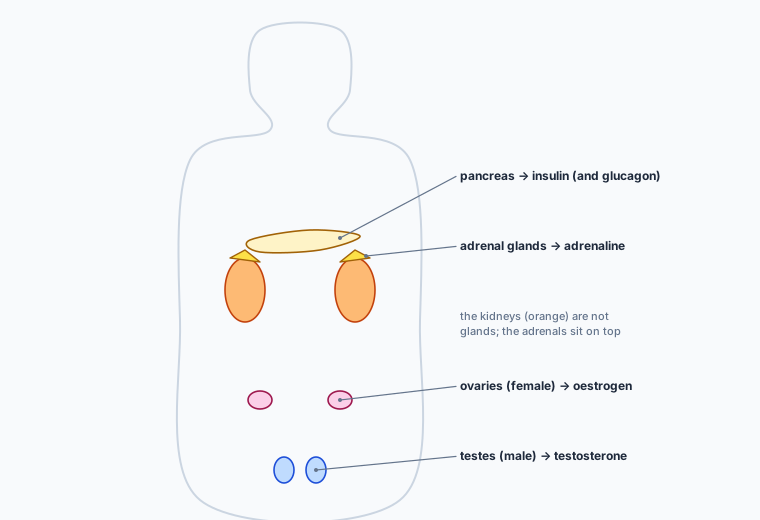
Adrenaline is secreted in “fight or flight” situations. Its effects: increased breathing rate, increased heart rate, and increased pupil diameter. EXTENDED It also increases the blood glucose concentration, so more glucose is available to muscles for respiration.
Homeostasis
Homeostasis is the maintenance of a constant internal environment. Insulin decreases blood glucose concentration.
EXTENDED Homeostatic control works by negative feedback around a set point: a change away from the set point is detected, and the response reverses the change.
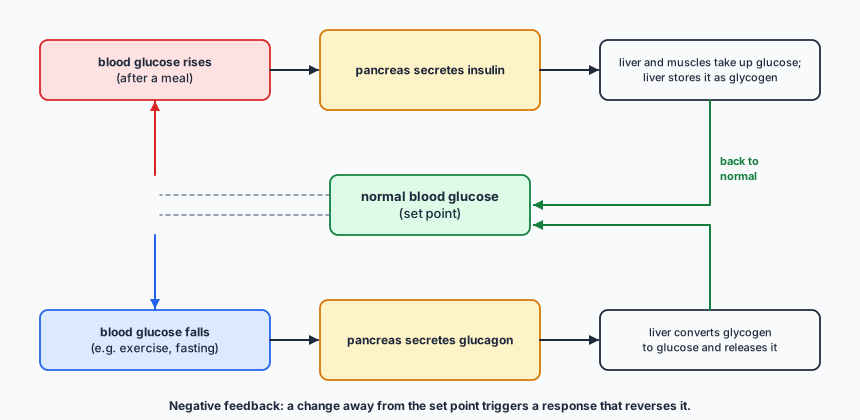
EXTENDED In type 1 diabetes the pancreas does not produce enough insulin, so blood glucose can rise dangerously high. It is treated by injecting insulin, monitoring blood glucose regularly, and managing diet and exercise.
Controlling body temperature EXTENDED
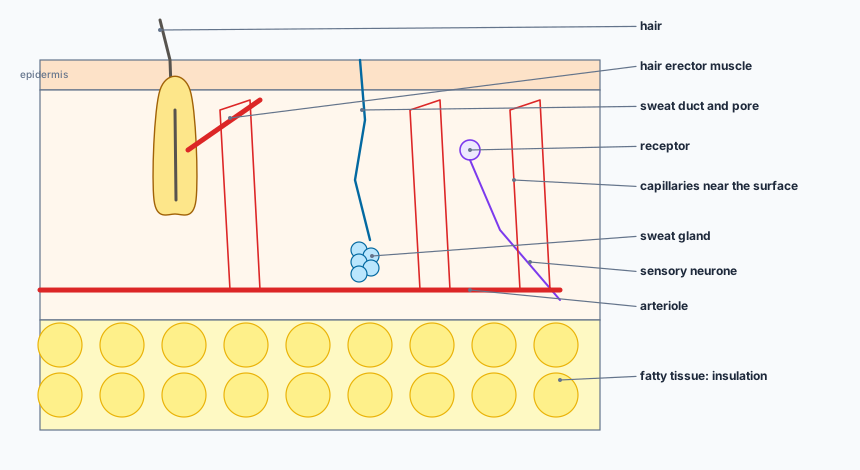
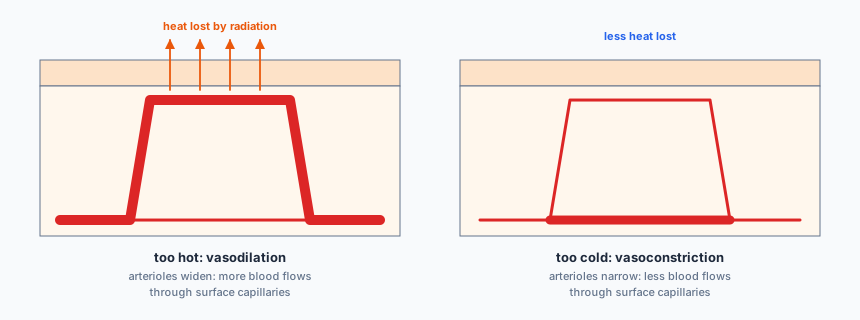
EXTENDED The brain monitors blood temperature and sends impulses to the skin and muscles. Insulation by fatty tissue (and by hairs raised to trap air, in many mammals) reduces heat loss. When too hot, sweat is secreted, and heat is lost as it evaporates. When too cold, muscles shiver, releasing heat from respiration.
Tropic responses
Gravitropism is a response in which parts of a plant grow towards or away from gravity. Phototropism is a response in which parts of a plant grow towards or away from the direction of the light source. Shoots show positive phototropism and negative gravitropism; roots show positive gravitropism.
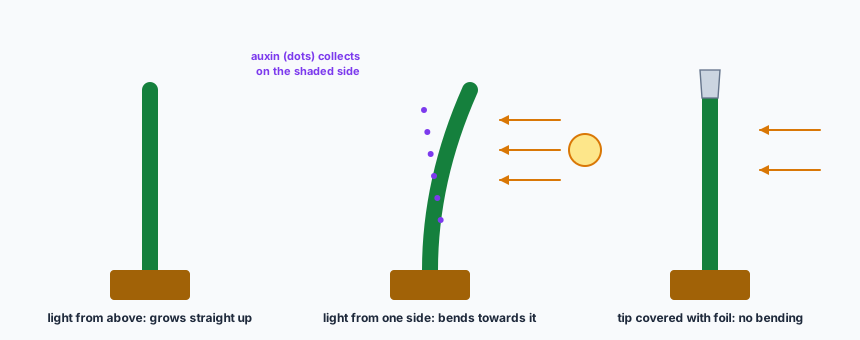
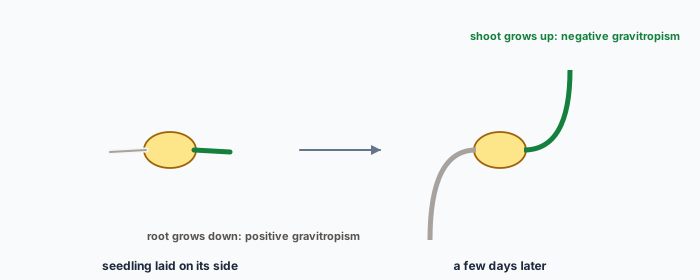
EXTENDED These are examples of the chemical control of plant growth by auxin:
- EXTENDED auxin is made in the shoot tip;
- auxin diffuses through the plant from the shoot tip;
- auxin is unequally distributed in response to light and gravity (in a shoot lit from one side, it collects on the shaded side);
- auxin stimulates cell elongation, so the shaded side grows longer and the shoot bends towards the light.
✏️Worked example
(a) Adrenaline. Any two: faster breathing rate; faster heart rate; wider pupils (increased blood glucose, Extended).
(b) The adrenaline response is hormonal, slower and longer-lasting; the pupil reflex is nervous, faster and short-lived.
(c) The fall is detected; the pancreas secretes glucagon; glucagon causes the liver to convert glycogen to glucose and release it into the blood, raising the concentration back to the set point (negative feedback).
(d) Auxin, made in the tip, collects on the shaded side; it stimulates cell elongation there, so the shaded side grows more and the shoot bends towards the light.
📝Practise
In the style of the multiple-choice, theory and practical papers. EXTENDED marks Supplement content.
1. (Multiple choice.) Which gland secretes testosterone? A: adrenal gland. B: pancreas. C: testes. D: ovaries.
2. (Theory.) Define a hormone. [2]
3. (Theory.) Define homeostasis, and state the effect of insulin on blood glucose. [2]
4. (Practical.) Describe an experiment to show that roots grow towards gravity. [3]
5. (Theory.) EXTENDED Explain how sweating cools the body. [2]
6. (Theory.) EXTENDED A person’s skin looks pale on a very cold day. Explain why. [3]
7. (Theory.) EXTENDED Explain the term negative feedback, using body temperature as an example. [2]
8. (Theory.) EXTENDED The tip is cut off a shoot, which is then lit from one side. Predict and explain the result. [2]
🔗Go deeper — other people’s work
These are external resources, not mine. If one stops working, tell me and everything above it on this page still stands.
- Diabetes UK — type 1 diabetes explained
- Science and Plants for Schools (SAPS) — phototropism investigations with seedlings