Asexual reproduction, sexual reproduction and flowers
🎯What you need to be able to do
- Describe asexual and sexual reproduction and fertilisation; discuss their advantages and disadvantages, and state haploid and diploid EXTENDED.
- Identify, draw and state the functions of the parts of an insect-pollinated flower; describe wind-pollinated flowers and pollen grains.
- Describe pollination and fertilisation, the adaptations of insect- and wind-pollinated flowers, and the conditions for germination.
- Describe self- and cross-pollination and their effects, and pollen tube growth EXTENDED.
📚The biology
Asexual reproduction
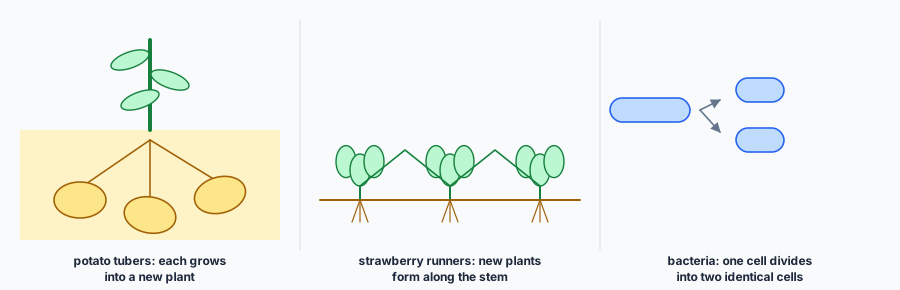
Asexual reproduction is a process resulting in the production of genetically identical offspring from one parent.
Sexual reproduction
Sexual reproduction involves the fusion of the nuclei of two gametes to form a zygote, producing offspring that are genetically different from each other. Fertilisation is the fusion of the nuclei of gametes.
EXTENDED The nuclei of gametes are haploid (one set of chromosomes); the nucleus of a zygote is diploid (two sets). Sexual reproduction produces variation, so some individuals may survive a change in the environment or a new disease; but it is slower, needs two parents (or pollinators), and a good crop variety will not breed true.
Flowers
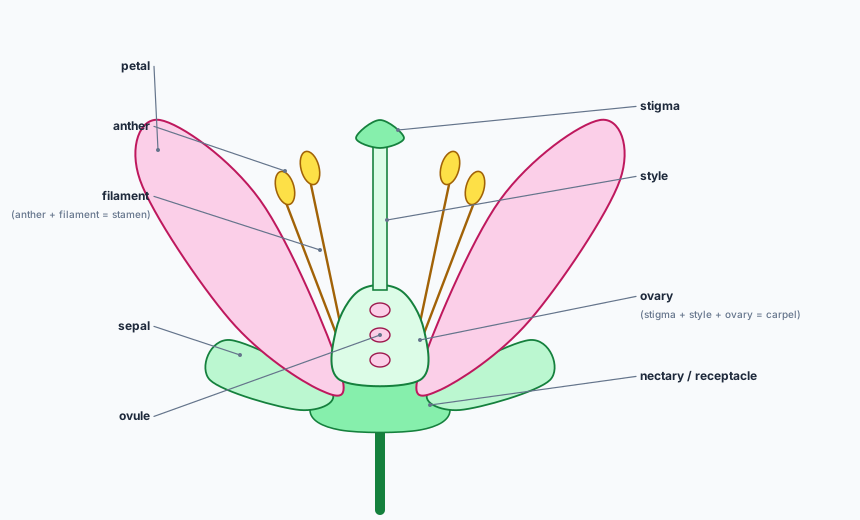
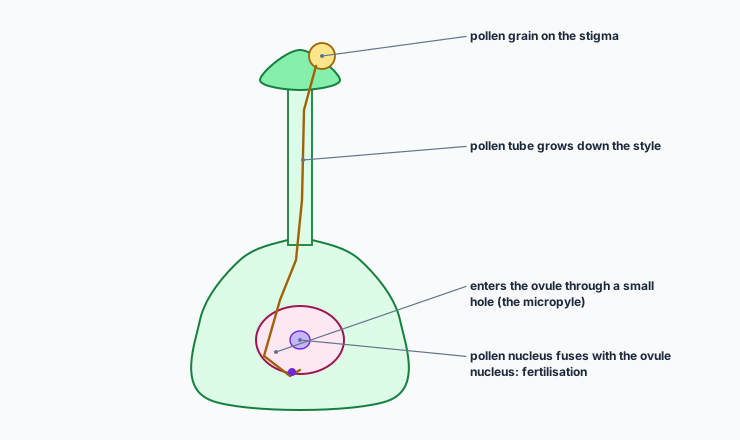
Pollination is the transfer of pollen grains from an anther to a stigma. Fertilisation occurs when a pollen nucleus fuses with a nucleus in an ovule.
Self- and cross-pollination EXTENDED
- EXTENDED Self-pollination: pollen goes from the anther of a flower to the stigma of the same flower, or of a different flower on the same plant.
- Cross-pollination: pollen goes to the stigma of a flower on a different plant of the same species.
- Cross-pollination produces more variation, so a population is better able to respond to changes in the environment; but it relies on pollinators (or wind) and wastes more pollen. Self-pollination does not depend on pollinators but gives less variation.
Germination
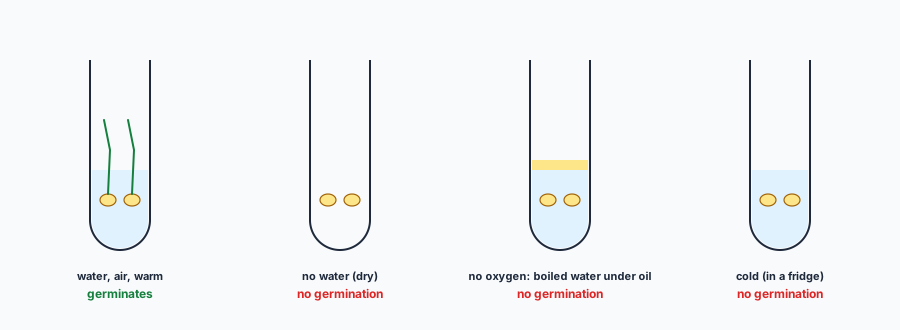
Seeds need water, oxygen and a suitable temperature to germinate (light is not needed). Water activates the enzymes and makes the seed swell; oxygen is needed for aerobic respiration; a suitable temperature lets the enzymes work.
✏️Worked example
(a) Ovules become seeds; the ovary becomes the fruit.
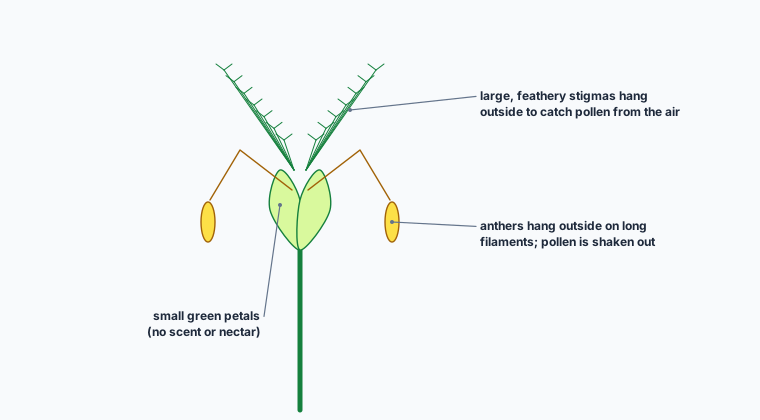
(b) Any two: small, dull or green petals; no scent or nectar; anthers hanging outside on long filaments; large, feathery stigmas outside the flower; large amounts of small, light pollen.
(c) Boiling removes dissolved oxygen; the oil stops oxygen from the air dissolving back in, so the seeds have water but no oxygen.
(d) Advantage: all the plants have the same desirable features (e.g. high yield). Disadvantage: they are genetically identical, so a disease could wipe out the whole crop.
📝Practise
In the style of the multiple-choice, theory and practical papers. EXTENDED marks Supplement content.
1. (Multiple choice.) Which part of a flower receives pollen grains? A: anther. B: stigma. C: ovary. D: sepal.
2. (Theory.) Define asexual reproduction. [2]
3. (Theory.) State the function of the petals and of the sepals in an insect-pollinated flower. [2]
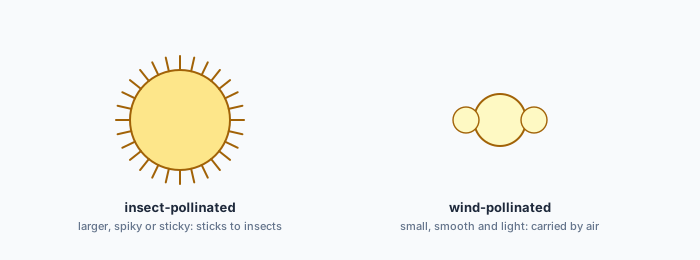
4. (Theory.) Describe two differences between the pollen of insect-pollinated and wind-pollinated flowers. [2]
5. (Practical.) State the three conditions seeds need for germination. [3]
6. (Theory.) EXTENDED A human body cell has 46 chromosomes. State the number in a sperm cell and in a zygote, and use the terms haploid and diploid. [3]
7. (Theory.) EXTENDED Explain why cross-pollination may help a species survive a change in its environment. [2]
8. (Theory.) EXTENDED Describe what happens between a pollen grain landing on a stigma and fertilisation. [3]
🔗Go deeper — other people’s work
These are external resources, not mine. If one stops working, tell me and everything above it on this page still stands.
- Science and Plants for Schools (SAPS) — growing pollen tubes in the lab
- Royal Botanic Gardens, Kew — pollination and pollinators