Biotechnology and genetic modification
🎯What you need to be able to do
- State why bacteria are useful in biotechnology and GM; discuss their few ethical concerns and plasmids EXTENDED.
- Describe yeast in biofuel production and bread-making, pectinase in fruit juice, and investigate biological washing powders.
- Explain lactase and lactose-free milk; describe fermenters and the conditions they control EXTENDED.
- Describe genetic modification and its examples; outline the process for a human protein and discuss GM crops EXTENDED.
📚The biology
Why bacteria?
Bacteria are useful in biotechnology and genetic modification because of their rapid reproduction rate and their ability to make complex molecules. EXTENDED There are also few ethical concerns over manipulating and growing them, and they contain plasmids — small rings of DNA that are easy to remove, change and put back.
Biotechnology
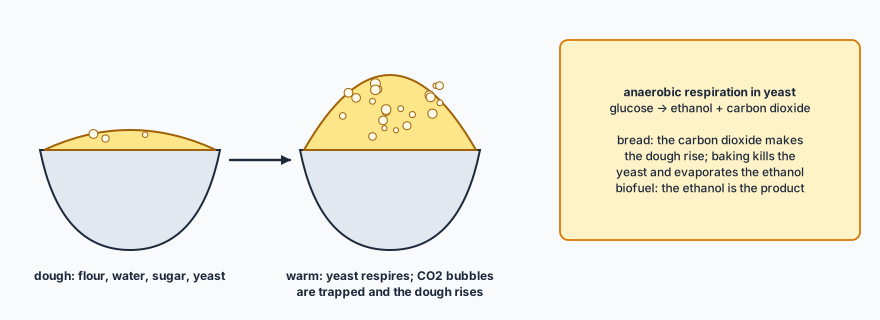
- Biofuel: yeast respires anaerobically, turning sugars (e.g. from sugar cane or maize) into ethanol and carbon dioxide; the ethanol is separated and used as a fuel.
- Bread-making: yeast in the dough respires anaerobically; the carbon dioxide bubbles make the dough rise; baking kills the yeast and evaporates the ethanol.
- Pectinase breaks down pectin, which holds plant cell walls together, so more juice is released from fruit, and the juice is clearer.
- Biological washing powders contain enzymes (proteases, lipases, amylases) that digest stains such as blood, egg, grease and food into small soluble molecules, which wash out. They work at lower temperatures, saving energy, but are denatured if the water is too hot.
- EXTENDED Lactase breaks down lactose into glucose and galactose. Lactose-free milk is made by passing milk over lactase, for people who are lactose intolerant (who produce too little lactase of their own).
Fermenters EXTENDED
A fermenter is a large vessel in which bacteria or fungi are grown in controlled conditions to make useful products on a large scale: insulin (from GM bacteria), penicillin (from the fungus Penicillium) and mycoprotein (a protein-rich food from the fungus Fusarium).
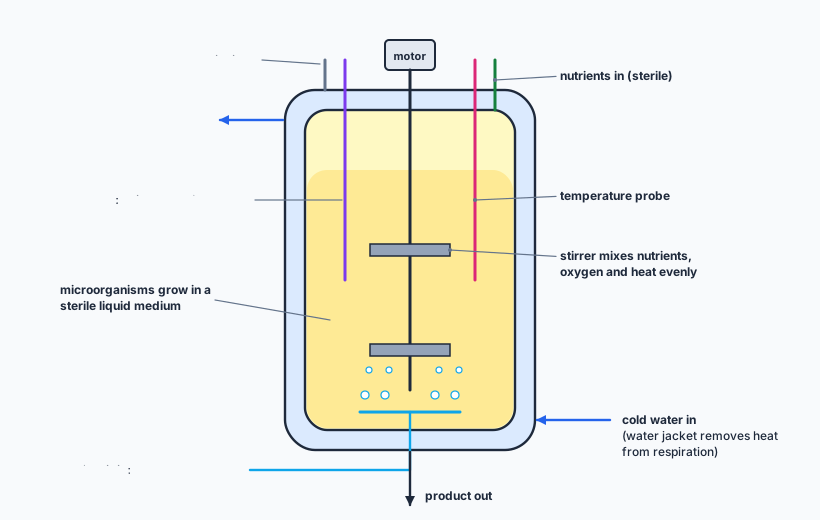
Everything is sterilised (by steam) first, so that no other microorganisms compete with the useful one or contaminate the product.
Genetic modification
Genetic modification is changing the genetic material of an organism by removing, changing or inserting individual genes. Examples:
- inserting human genes into bacteria to produce human proteins, such as insulin;
- inserting genes into crop plants to give resistance to herbicides (the field can be sprayed to kill weeds without killing the crop);
- inserting genes into crop plants to give resistance to insect pests (the plant makes a toxin that kills insects feeding on it);
- inserting genes into crop plants to improve nutritional qualities (Golden Rice makes a substance the body converts into vitamin A).
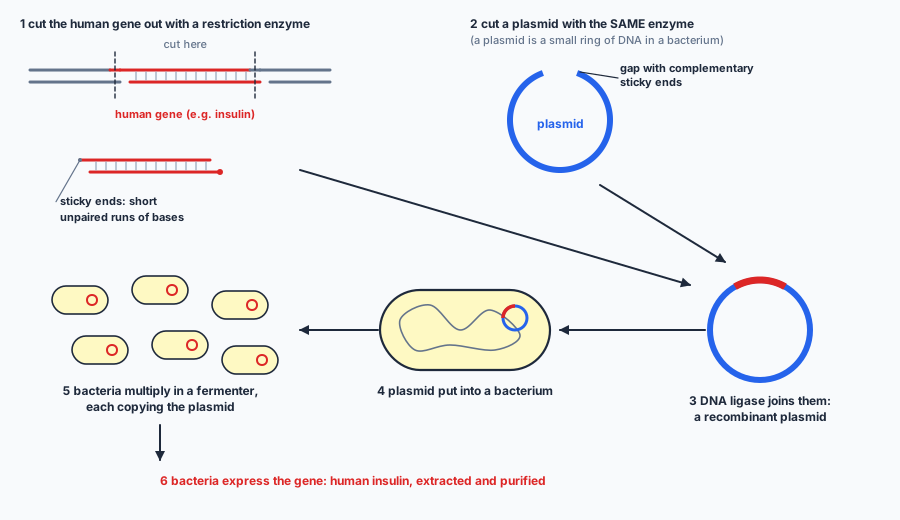
- EXTENDED The DNA of the human gene is isolated, cut out with a restriction enzyme, forming sticky ends.
- Bacterial plasmid DNA is cut with the same restriction enzyme, forming complementary sticky ends.
- The human DNA is inserted into the plasmid using DNA ligase, forming a recombinant plasmid.
- The recombinant plasmids are inserted into bacteria.
- The bacteria containing recombinant plasmids multiply.
- The bacteria express the human gene and make the human protein.
EXTENDED GM crops such as soya, maize and rice:
- Advantages: higher yields; less insecticide sprayed (insect-resistant crops), so fewer harmless insects are killed; easier weed control; better nutrition (vitamin A in rice); crops for drought or salty soils.
- Disadvantages: GM seed is expensive, and farmers may have to buy new seed each year; herbicide-resistance genes may spread to wild relatives by pollen, making “superweeds”; insect-resistant crops may harm non-pest insects; reduced biodiversity; some people are concerned about safety or the ethics of changing genes.
✏️Worked example
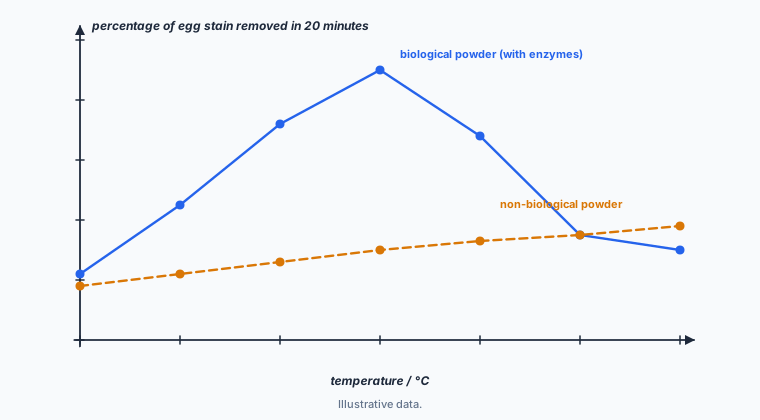
(a) 40 °C, removing 90% of the stain.
(b) Above the optimum, the enzyme (protease) is denatured: its active site changes shape, so it no longer fits the protein substrate, and less of the stain is digested.
(c) It works well at a low temperature (40 °C), so less energy is needed to heat the water.
(d) Any two: mass or concentration of powder; volume of water; size and age of the stain; type of cloth; time (20 minutes); amount of stirring.
📝Practise
In the style of the multiple-choice and theory papers. EXTENDED marks Supplement content.
1. (Multiple choice.) Which product of anaerobic respiration in yeast makes bread dough rise? A: carbon dioxide. B: ethanol. C: lactic acid. D: oxygen.
2. (Theory.) State two features of bacteria that make them useful in biotechnology. [2]
3. (Theory.) Define genetic modification. [2]
4. (Theory.) Describe how yeast is used to produce ethanol for fuel. [3]
5. (Theory.) EXTENDED Explain how lactose-free milk is produced and who it is for. [3]
6. (Theory.) EXTENDED Explain why a fermenter producing penicillin has a water jacket and a supply of sterile air. [4]
7. (Theory.) EXTENDED Explain why the same restriction enzyme is used to cut the human DNA and the plasmid. [2]
8. (Theory.) EXTENDED Discuss one advantage and two disadvantages of growing insect-resistant GM maize. [3]
🔗Go deeper — other people’s work
These are external resources, not mine. If one stops working, tell me and everything above it on this page still stands.
- Your Genome (Wellcome Connecting Science) — what is genetic engineering?
- BBC Bitesize — biotechnology and genetic modification