Organizational structure
🎯What you need to be able to do
- Explain delegation, span of control, levels of hierarchy, chain of command, bureaucracy, centralization, decentralization, delayering and matrix structure.
- Construct and interpret organization charts: flat/horizontal, tall/vertical, by product, by function and by region.
- Evaluate the appropriateness of different structures given a change in external factors.
- HL Evaluate changes in organizational structure: project-based organization and Handy’s shamrock organization.
📚The business management
Key terminology
- Levels of hierarchy: the number of layers of management and supervision from top to bottom.
- Chain of command: the formal line of authority through which decisions and instructions pass down (and information passes up).
- Span of control: the number of subordinates who report directly to one manager.
- Delegation: passing authority to make decisions down to a subordinate (the manager remains ultimately responsible). Motivates staff and frees managers’ time; needs trust and training.
- Centralization: decision-making kept at the top (head office). Consistency and control, but slow and less responsive locally.
- Decentralization: decision-making authority spread to lower levels or regional managers. Faster, local responsiveness and motivation; risk of inconsistency.
- Bureaucracy: an organization run by many formal rules, procedures and documents. Predictable and fair, but slow and inflexible (“red tape”).
- Delayering: removing one or more levels of hierarchy, usually middle management. Cuts costs and speeds communication, but widens spans of control and can overload remaining managers and lower morale.
- Matrix structure: staff report to both a functional manager and a project manager (see below).
Tall and flat structures
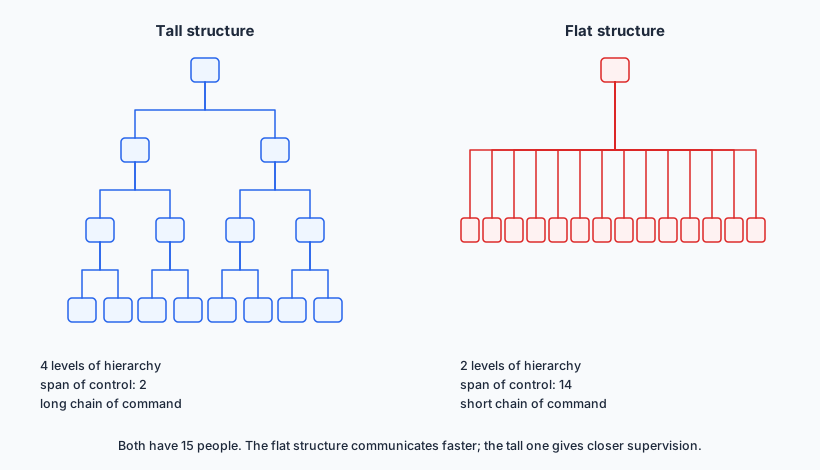
many levels, narrow spans. Advantages: close supervision and control; clear promotion ladder. Disadvantages: slow communication through a long chain of command; messages distorted; high management costs; staff may feel remote from decisions.
few levels, wide spans. Advantages: fast communication; lower management costs; more delegation and empowerment. Disadvantages: managers can be overloaded; less supervision; fewer promotion opportunities; needs skilled, self-motivated staff.
Charts by function, product and region
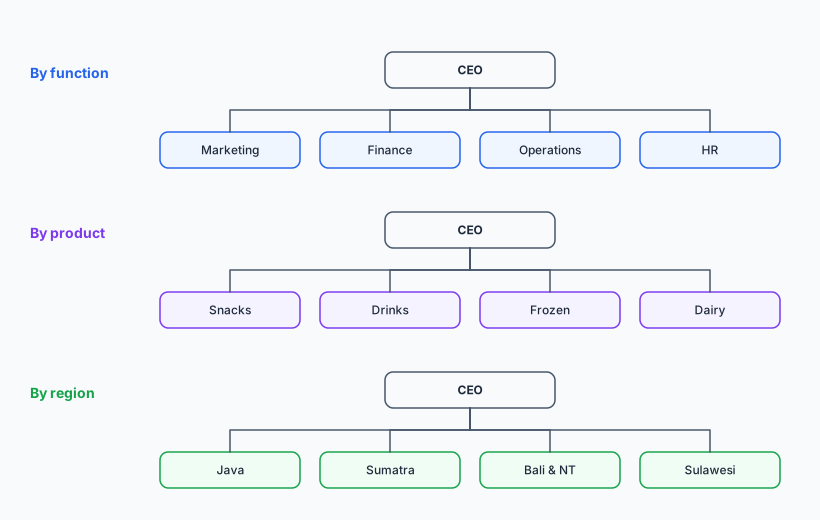
- By function: departments for marketing, finance, operations, HR. Specialists work together; can become “silos” that do not cooperate.
- By product: divisions for each product line, each with its own functions. Focus on each market; duplication of functions raises costs.
- By region: divisions for each geographical area. Responsive to local customers and culture; duplication and possible inconsistency between regions.
Matrix structure
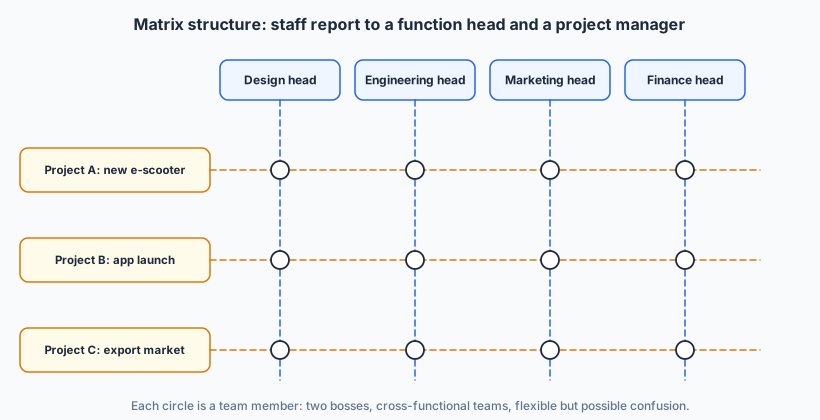
Advantages: cross-functional teams bring together different expertise; flexible and good for innovation and projects. Disadvantages: two bosses can cause confusion and conflict over priorities; complex to coordinate; more meetings.
Choosing a structure when the environment changes
There is no best structure: it should fit the organization’s size, strategy, culture and environment. A fast-changing, competitive market (technology, fashion) favours flatter, decentralized, flexible structures that respond quickly. A stable, highly regulated environment (banking, utilities) may justify more hierarchy and centralization for control. Growth into new countries often leads to regional divisions; new product lines to product divisions; remote working to flatter structures with more delegation.
New ways of organizing HL
- Project-based organization: work is organized around temporary projects with teams formed and disbanded as needed (common in construction, consulting, film production and software). Flexible and focused, but less job security and continuity.
- Handy’s shamrock organization: Charles Handy argued that organizations increasingly have three “leaves” of workers:
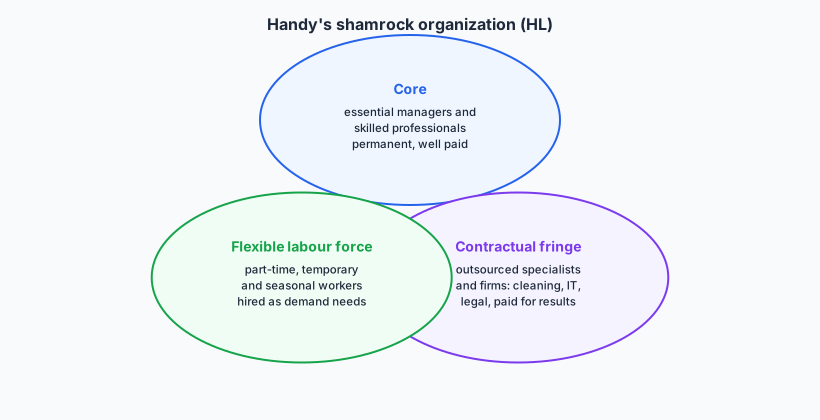
Evaluation: the shamrock cuts fixed costs and increases flexibility, and lets the firm focus on its core competences. But it can lower commitment and loyalty among fringe and flexible workers, create two-tier workforces, raise coordination problems and quality risks with outsourcing, and it depends on a supply of flexible labour.
✏️Worked example
(a) Levels: managing director, regional managers, store managers, sales staff = 4 levels. Span of control of a regional manager = 4; of a store manager = 8.
(b) After delayering, there are 3 levels and the managing director’s span rises from 3 to 12. Advantage: lower salary costs (3 regional manager salaries saved) and faster communication between stores and the top. Disadvantage: the managing director must supervise 12 store managers, which may overload them, reduce support for store managers and weaken regional coordination; the lost regional roles also remove promotion opportunities.
📝Practise
Work through these on paper, then reveal the answer.
1. [2 marks] Define the term span of control.
2. [2 marks] Distinguish between centralization and decentralization.
3. [4 marks] Construct an organization chart by function for a small company with a CEO, a marketing manager with 2 staff, a finance manager with 1 staff member, and an operations manager with 5 staff.
4. [4 marks] Explain one advantage and one disadvantage of a matrix structure for an engineering firm.
5. [4 marks] Explain why a technology start-up is likely to have a flat structure.
6. HL [10 marks] Discuss whether a hotel group should adopt Handy’s shamrock model.
For: tourism demand is seasonal, so a flexible labour force (seasonal staff) matches labour to demand and cuts costs; outsourcing laundry, security and IT to a contractual fringe lets the group focus on core hospitality; a small core of skilled managers keeps standards.
Against: service quality depends on staff; temporary and outsourced workers may be less committed, less trained and less familiar with the brand; high turnover raises training costs; two-tier workforce may harm morale; loss of control over outsourced quality.
Judgment: suitable for non-guest-facing work and peak-season support, but guest-facing roles benefit from a larger committed core. A partial adoption with strong training and service contracts is likely best.
🔗Go deeper — other people’s work
These are external resources, not mine. If one stops working, tell me and everything above it on this page still stands.
- Charles Handy, The Age of Unreason — where the shamrock organization was introduced.
- Company annual reports — many include an organization chart or describe their divisional structure.
- Harvard Business Review — articles on flat organizations and the challenges of matrix management.