Crisis management and contingency planning
🎯What you need to be able to do
- HL Explain the difference between crisis management and contingency planning.
- HL Explain the factors that affect effective crisis management: transparency, communication, speed and control.
- HL Evaluate the costs and advantages of contingency planning.
📚The business management
Crisis management and contingency planning
A crisis is an unexpected event that threatens the business, its people, its reputation or its survival.
- Contingency planning happens before a crisis: identifying what could go wrong, assessing how likely and damaging each risk is, and preparing plans (who does what, backup suppliers, data backups, evacuation routes, prepared statements), then testing them.
- Crisis management happens during and after a crisis: the steps taken to limit the damage, protect people and restore normal operations and reputation.
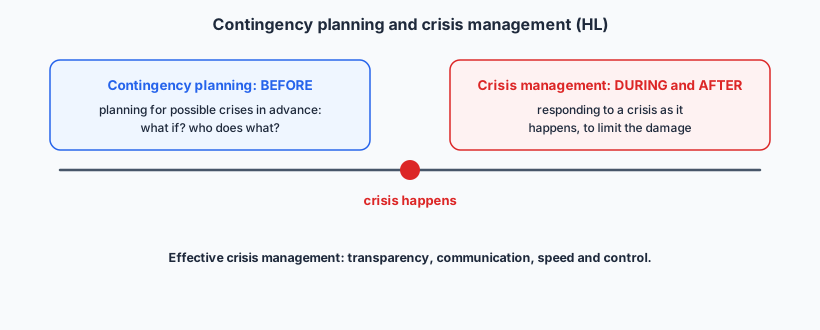
What makes crisis management effective
- Transparency: being open and honest about what happened. Hiding facts that later emerge destroys trust.
- Communication: clear, consistent, frequent messages to every stakeholder (staff, customers, media, regulators, investors), through one trusted spokesperson and the right channels, including social media.
- Speed: acting and communicating quickly, before rumours fill the gap; a slow response looks like indifference.
- Control: senior managers taking charge, a clear chain of command and a crisis team, so decisions are coordinated and the business, not the media, shapes the story.
Costs and advantages of contingency planning
faster, calmer response; less damage and downtime; protects lives and reputation; reassures staff, insurers, lenders and investors; may lower insurance premiums; planning itself reveals risks that can be reduced.
time and money to plan, train and run drills; backup systems and spare suppliers cost money even if never used; cannot foresee every crisis (the pandemic caught most plans out); plans go out of date; may create false confidence.
The value of a plan depends on the probability and impact of each risk: a Bali resort must plan for volcanic eruptions, earthquakes and flight cancellations; a software firm for data breaches and outages.
✏️Worked example
Speed and control: the crisis team meets immediately; production of the batch stops; a voluntary recall is launched within hours.
Transparency and communication: a public statement names the batch numbers, explains the risk and how to get a refund; retailers and the food regulator are told first; staff are briefed so they give consistent answers; social media is monitored and answered.
After: investigate the cause, fix the process, report findings openly, and rebuild trust (quality assurance, 5.3).
Contingency planning would have provided batch tracing, a ready recall procedure, retailer contacts and draft statements, cutting the response from days to hours.
📝Practise
Work through these on paper, then reveal the answer.
1. [2 marks] Define the term contingency planning.
2. [2 marks] Distinguish between crisis management and contingency planning.
3. [4 marks] Explain why speed and transparency matter when a hotel suffers a data breach.
4. [4 marks] Explain two costs of contingency planning for a small business.
5. [10 marks] Discuss whether contingency planning is worthwhile for a tour operator in Indonesia.
Worthwhile: high exposure to natural disasters (volcanoes, earthquakes, floods), flight disruption, health crises and political events; tourists’ safety and the firm’s legal duty of care; a quick, organized response protects reputation in review-driven markets; insurers and partners may require plans.
Limits: costs of planning and drills; many crises are unforeseeable; plans must be updated; over-planning for rare events wastes resources.
Judgment: worthwhile, focused on high-probability, high-impact risks (evacuation, rebooking, communication with customers and families) and kept simple and practised.
🔗Go deeper — other people’s work
These are external resources, not mine. If one stops working, tell me and everything above it on this page still stands.
- Case studies: Johnson & Johnson’s 1982 Tylenol recall, often cited as a model crisis response.
- BNPB (Indonesia’s disaster management agency) — guidance on disaster preparedness.
- Harvard Business Review — articles on crisis communication.